Rocca Pisana
Archaeological Area
Archaeological Area
Scarlino Museums

Scarlino Museums
Rocca Pisana
The highest point of the Scarlino hill plateau, protected by steep slopes, has always held great importance throughout the town’s long history.
Over the centuries, its strategic position made it possible to control both the coastline and the plain below, which in ancient times was covered by a saltwater lake.
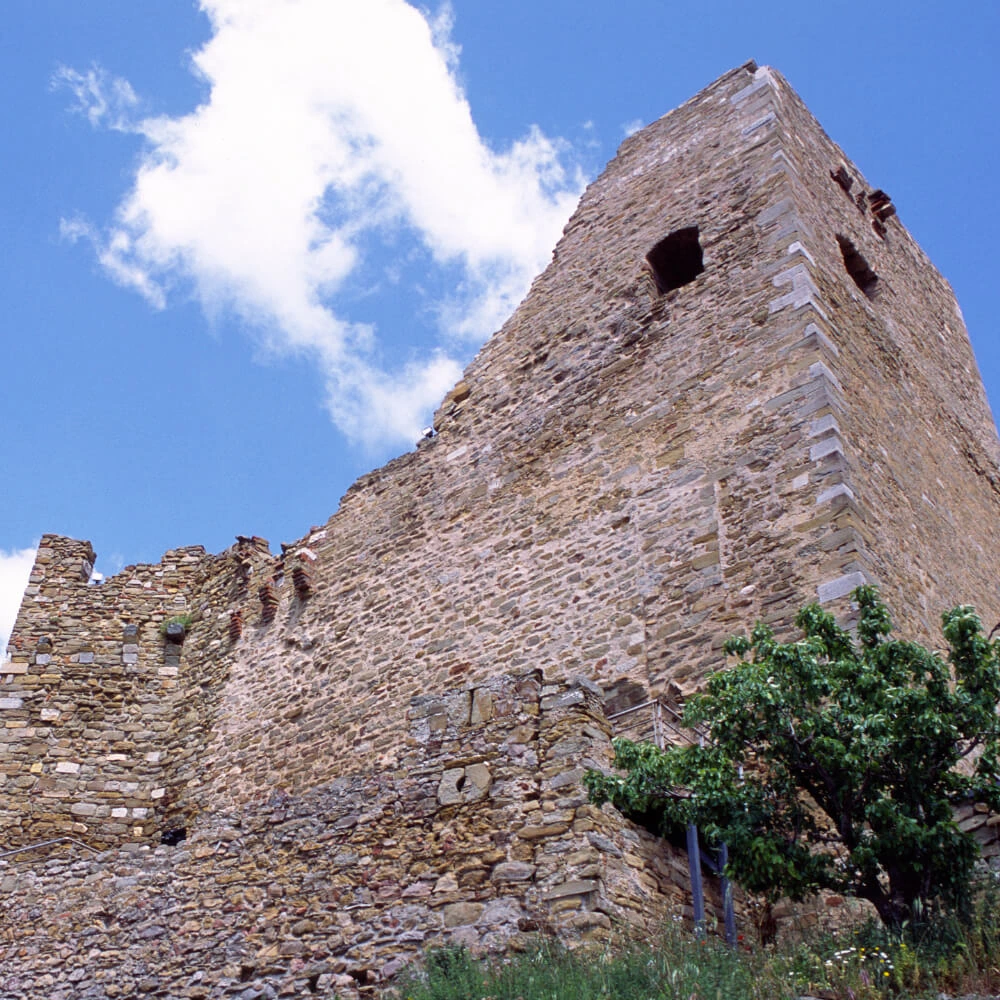
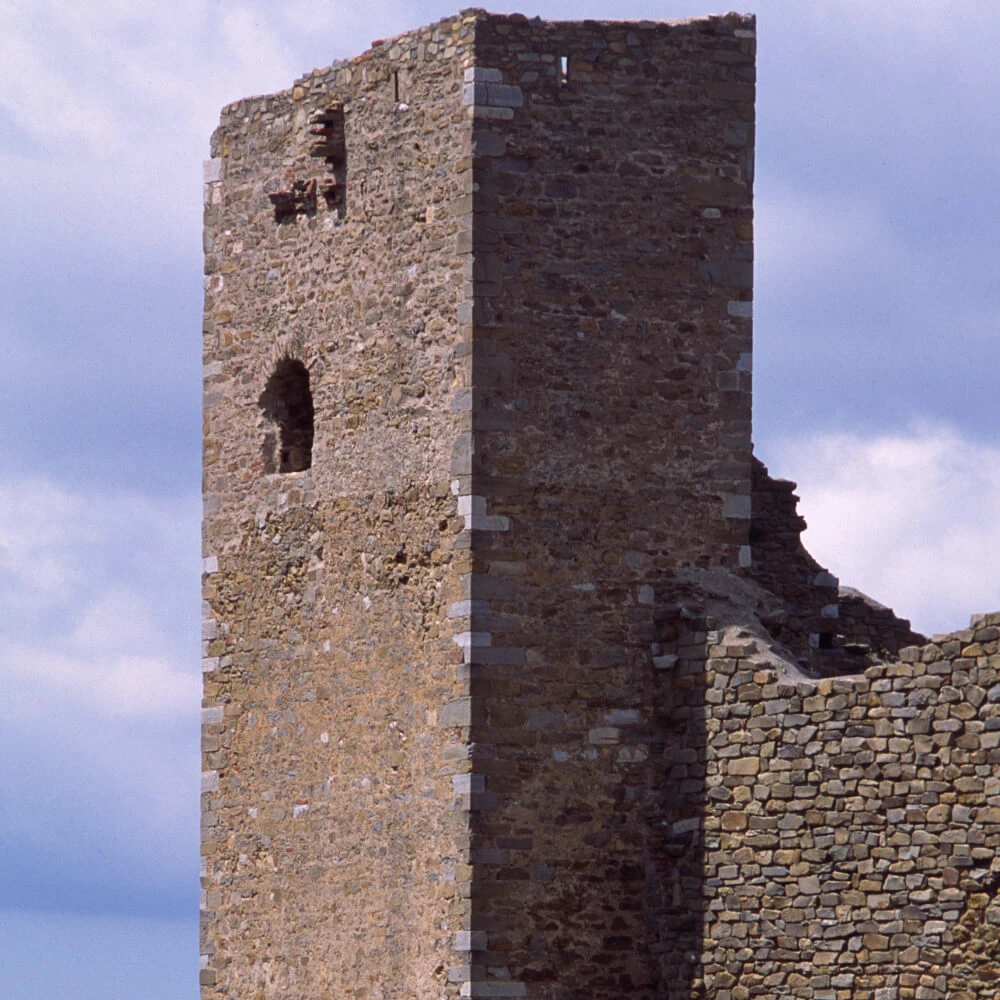
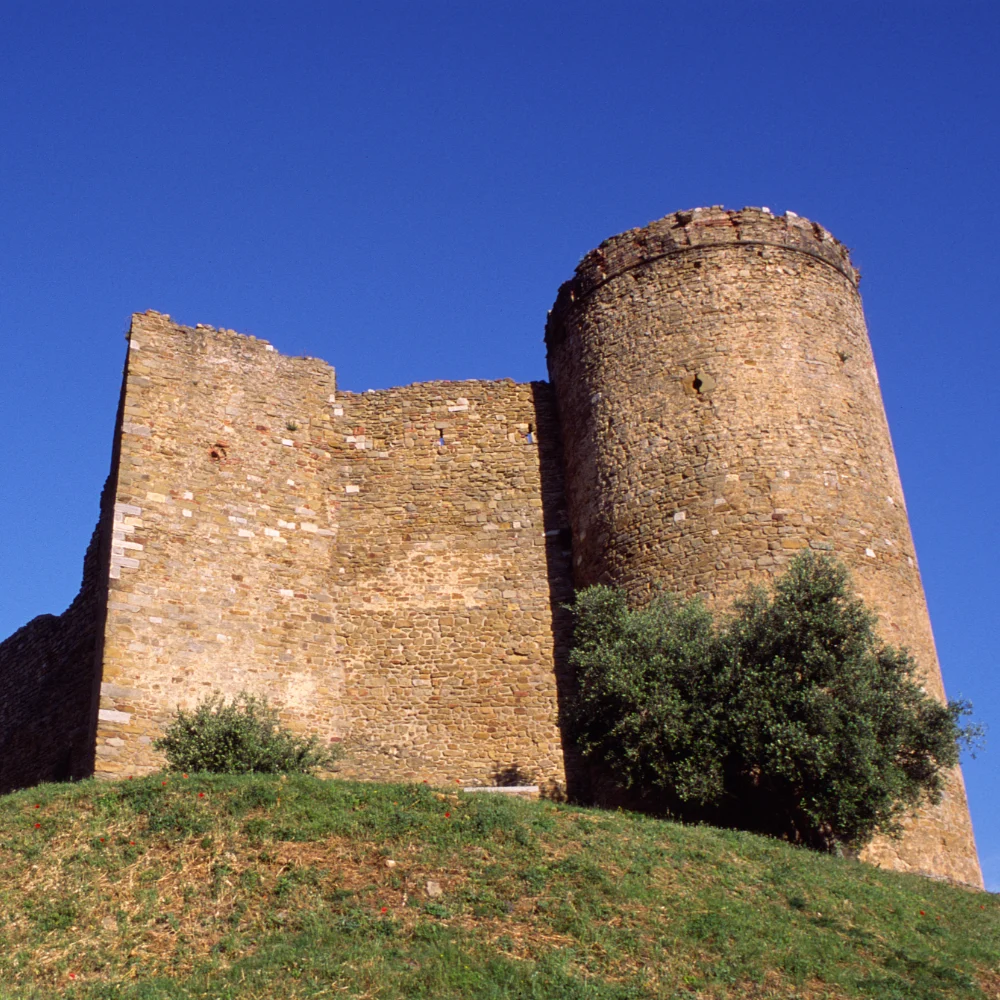
Today, visitors to the hilltop plateau can admire the fortress, sections of the city walls, the remains of medieval buildings, and a small church.
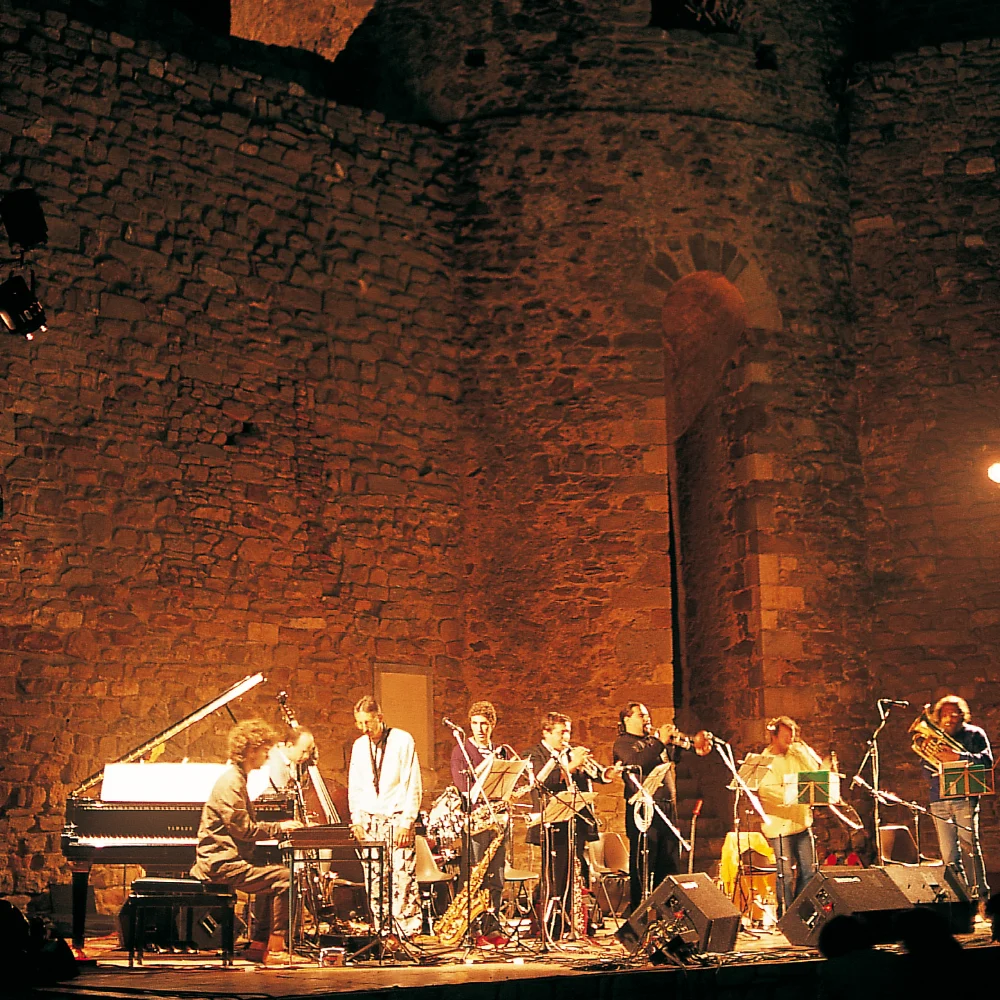
In more recent centuries, the Rocca ceased to serve as a residence and fortification, first becoming the community cemetery – as evidenced by the gravestones still visible on the walls of the inner courtyard – and later transforming into a fascinating historical and archaeological site, as well as an open-air theatre.
The Rocca as we see it today reflects the 15th-century renovation commissioned by the Appiani family, lords of Piombino, which was built upon the earlier Pisan fortress.
Archaeological investigations carried out in the 1970s and 1980s by the University of Siena, under the direction of Riccardo Francovich, have since revealed the history of Scarlino’s hill, spanning more than thirty centuries.
Rocca Pisana
Area archeologica
Rocca Pisana
Via Panoramica della Rocca
58020 Scarlino GR
A History Spanning 30 Centuries

The earliest evidence of human presence on the hill of Scarlino, identified by archaeologists in the inner garden of the Rocca, dates back to the late Bronze Age. It includes the remains of a small settlement with wooden huts and food-storage areas.
Similar villages are thought to have arisen on other hills in the area and near Puntone, where a contemporary centre dedicated to salt production has been discovered.
A new phase of settlement is documented in the Etruscan period, when, under the influence of the city of Vetulonia — at its peak between the 8th and 7th centuries BC — the entire coastal area experienced a wave of repopulation, giving rise to small rural settlements. On the hill of Scarlino lie the traces of one of these small settlements, clearly connected to the processing of iron ore from the Island of Elba.
Between the 5th and 4th centuries BC, with the decline of Vetulonia, the gradual rise of nearby Populonia, and the growing threat of Roman expansion, the coastal area underwent profound changes.
From this period date the remains of a monumental late Etruscan fortress (4th–3rd century BC), made up of a series of rectangular rooms with wells and cisterns for storing liquids and food, protected by a mighty defensive wall. Even today, sections of this impressive wall can still be seen, later reused as the foundation for medieval structures.
With the Romanisation of Etruria, the fortress of Scarlino—like other similar strongholds along the coast—lost its defensive role and was gradually abandoned in favour of the plain below.
This was the age of the great villae: true agricultural estates spread mainly across the plain, around the ancient lake, and along the coast near Portus Scabris, close to Puntone.
The return to the hill came at the dawn of the Middle Ages, when a new village of huts was built on the summit.
From the 9th century onwards, a new curtense centre took shape: the first feudal nucleus, complete with dwellings, warehouses, and a church, which would later develop into Scarlino’s first castle. This is likely the centre mentioned in a document of 973, the earliest reference to Scarlino, listed among the courts and castles of the Aldobrandeschi family in the Maremma.
Between the 12th and 13th centuries, Scarlino grew into the seigneurial centre of the territory. It was provided with a keep and new walls, a new church, and two large stone buildings outside the fortress, whose remains are still visible today among the olive trees in the park.

In 1275, Pisa subjugated Scarlino in order to strengthen its control over the Maremma coast.
This led to a complete restructuring of the castle: all the Romanesque structures were demolished and the plateau was levelled. A precise construction plan was drawn up to build the Rocca, with a pentagonal base and three towers, completed in the early 14th century. The city walls were also expanded to enclose the entire village.
The Pisan military fortress remained in use until February 1399, when Gherardo Appiani—after selling the city of Pisa to the Visconti of Milan—established a small but strategically important domain. This became the State of Piombino, which included, in addition to Scarlino and the capital Piombino, the Island of Elba, Suvereto, Buriano, and Badia al Fango in the territory of Castiglione della Pescaia.
Under the Appiani family, the fortress underwent further renovations: a ravelin (a second wall around the main façade, built to withstand artillery fire) was added, and a deep moat was excavated to divide the plateau. From the 15th century onwards, no further permanent building works were undertaken. The esplanade was instead used as an open space, deliberately kept clear for defensive purposes.

At the top of the hill, the remains of a small church are still clearly visible. They include two apses, rebuilt at different times—one early medieval and the other Romanesque—as well as the stone walls of the stable and barn.
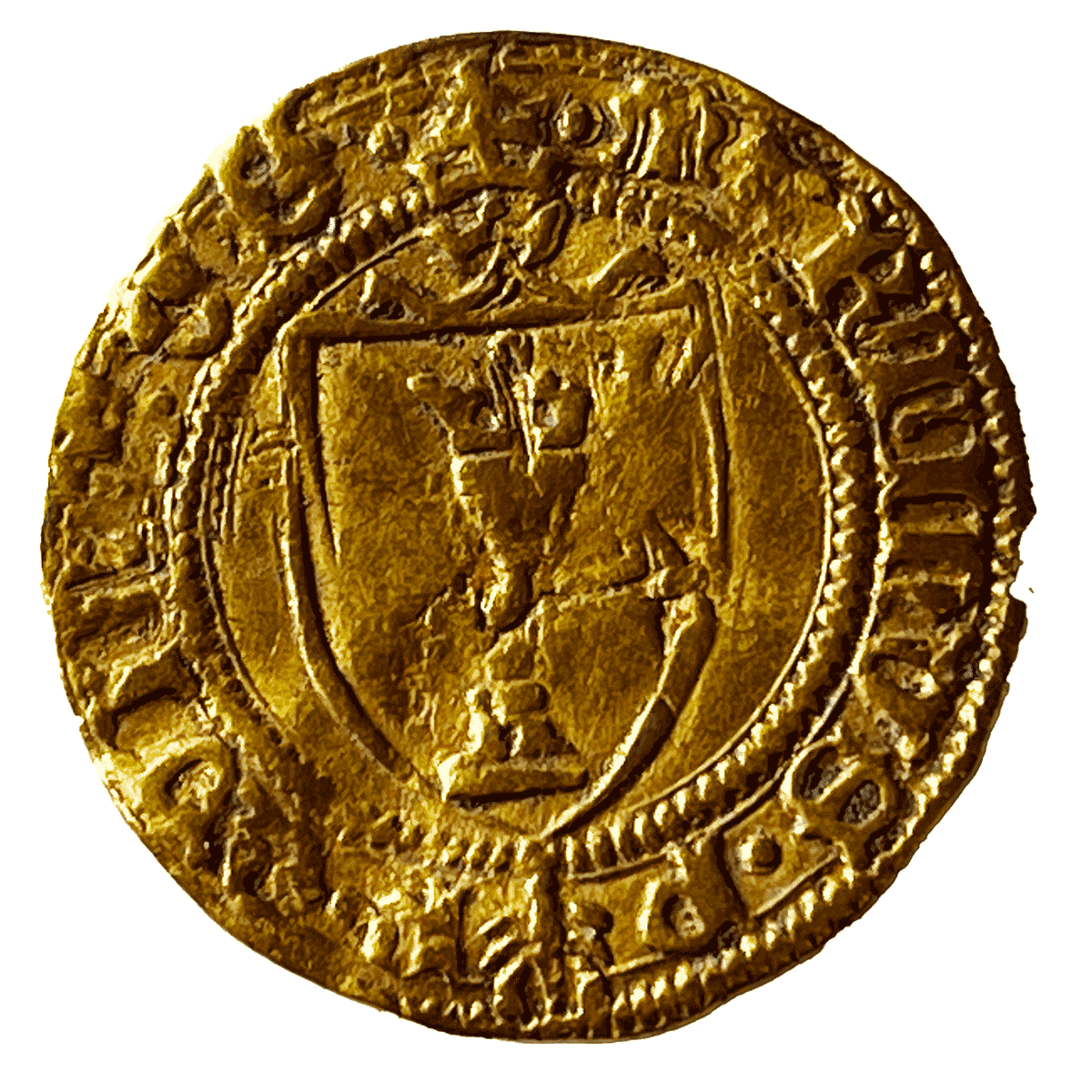
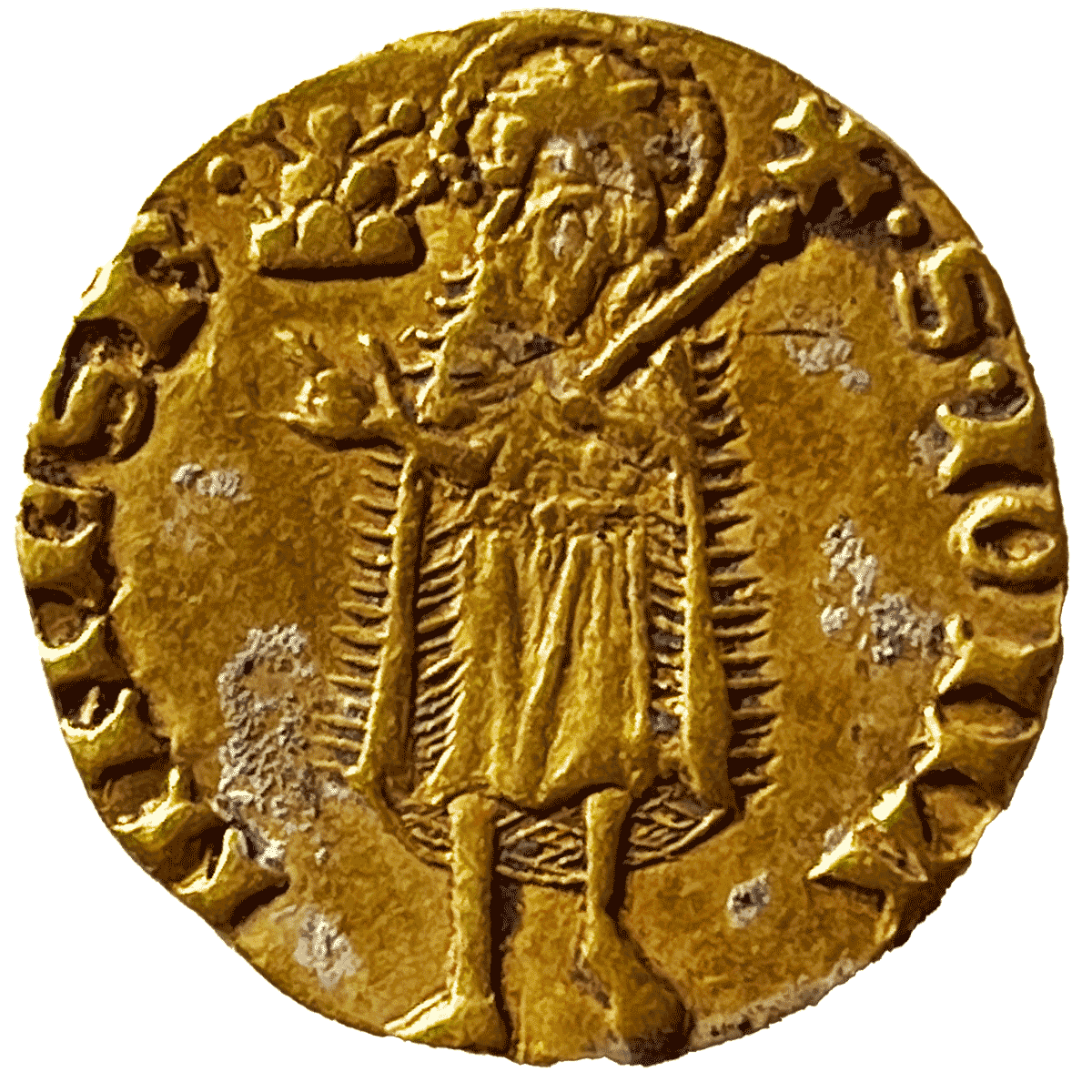
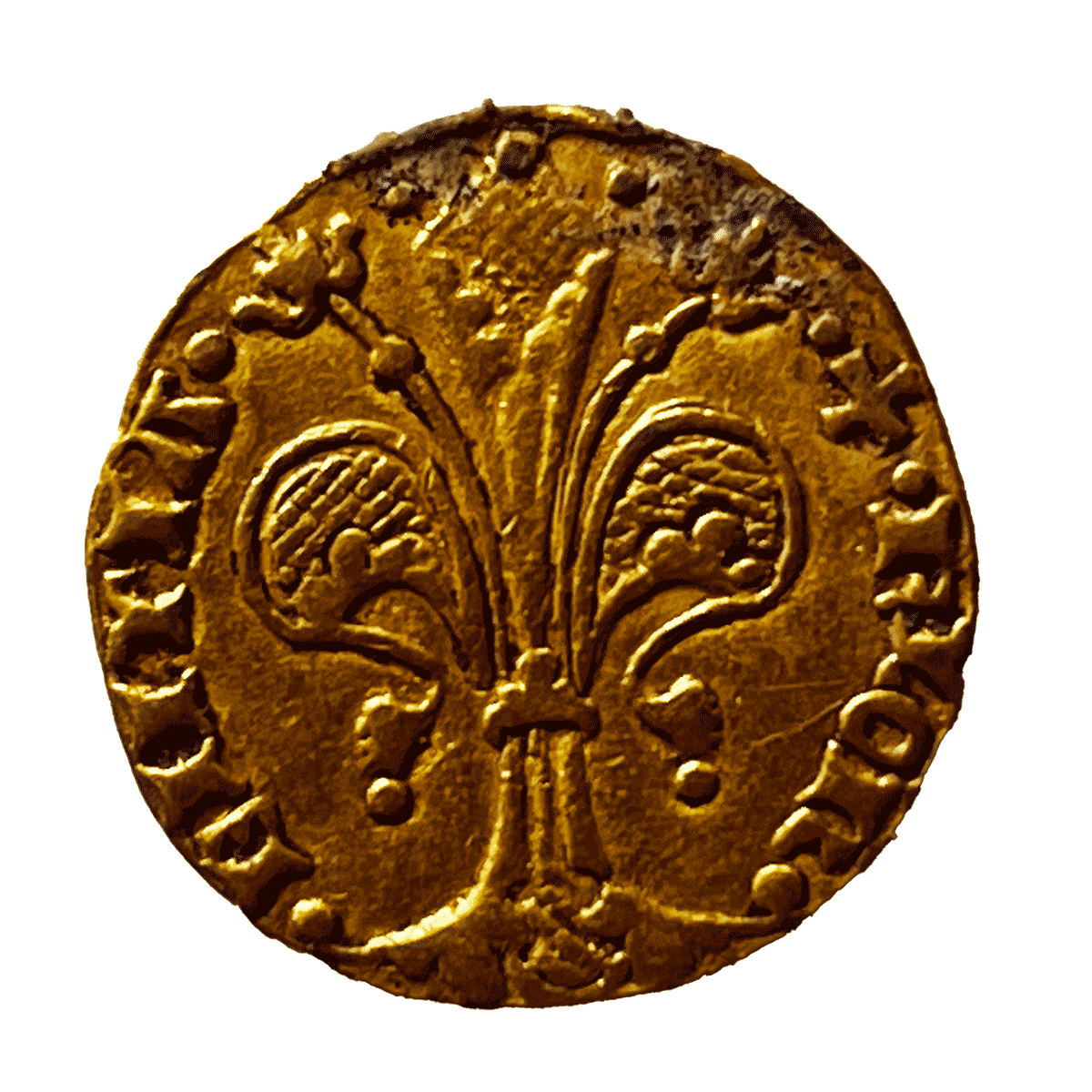
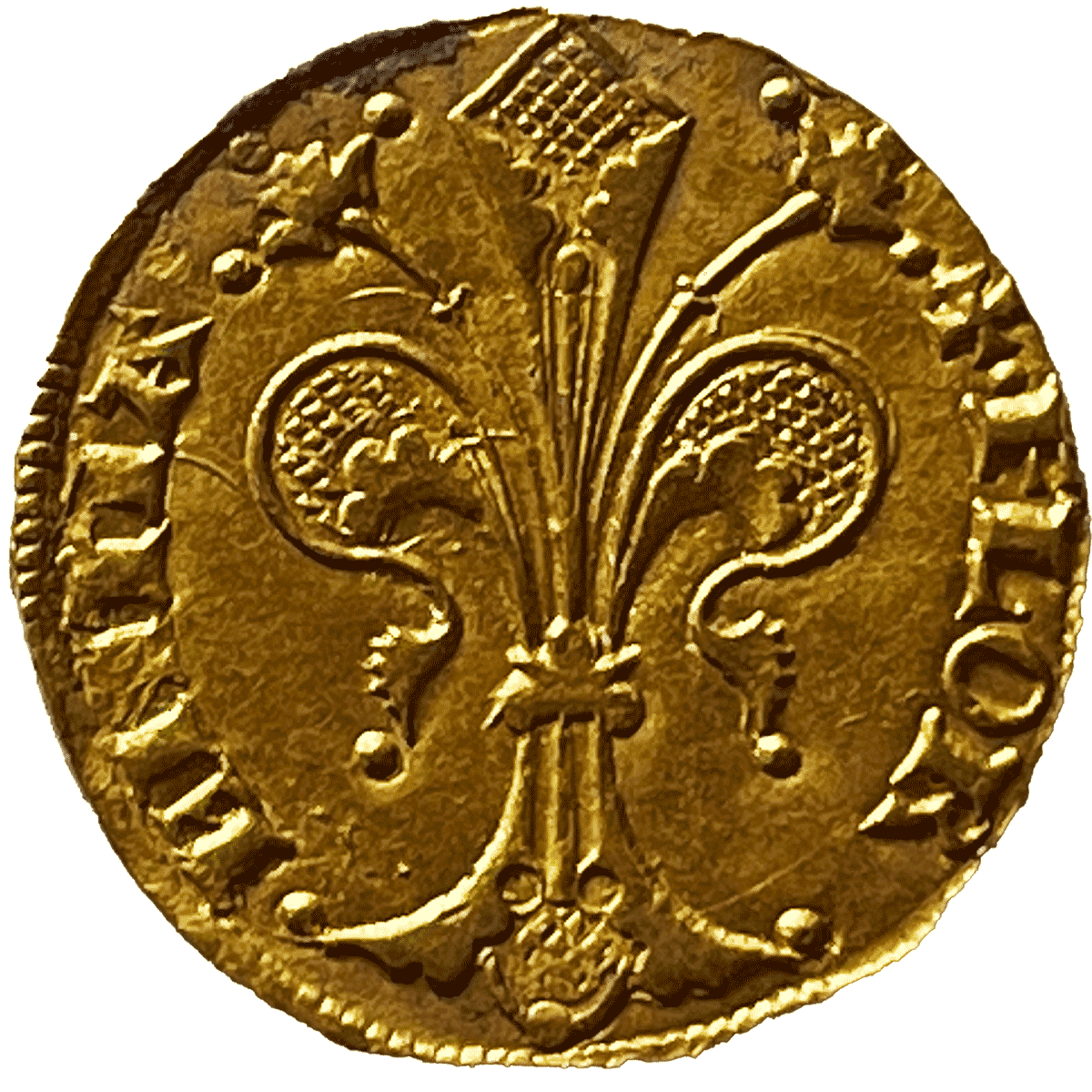
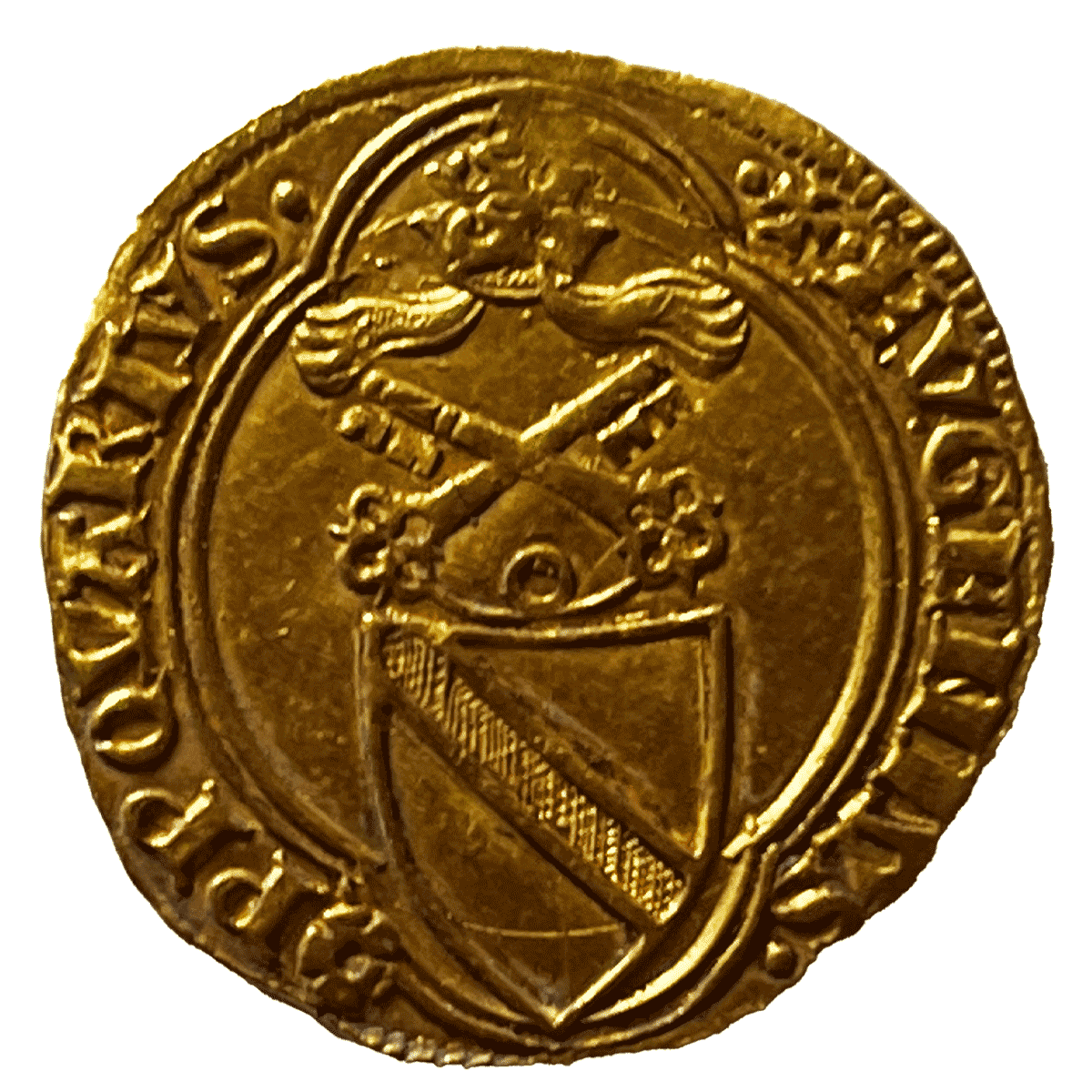
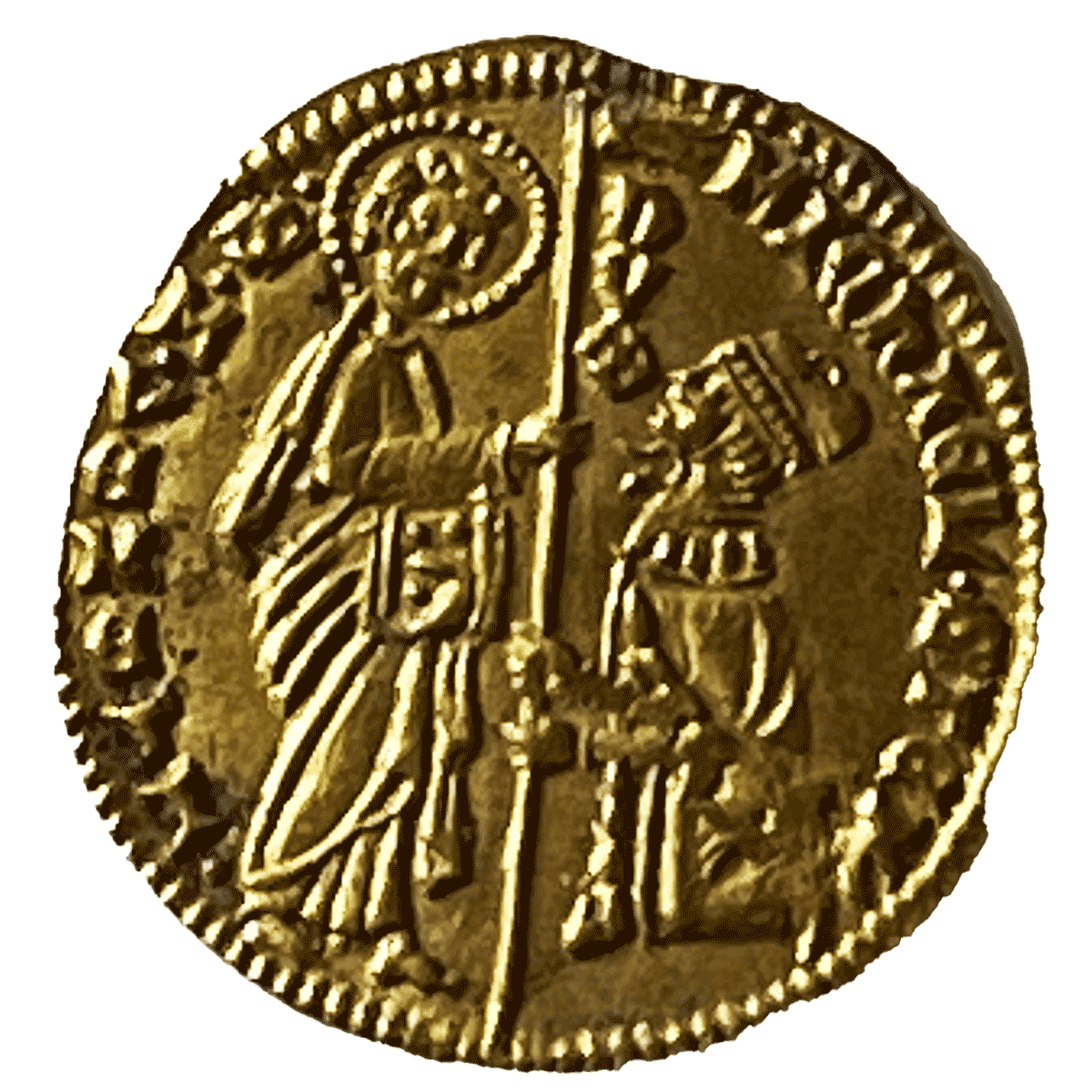
Archaeological excavations in this area uncovered the so-called “Scarlino Treasure”, now preserved at the CDT Francovich, which sheds light on the history of the ancient castle church.
We know that this was the first masonry building constructed within a settlement of wooden and earthen houses, around the 9th–10th century. It was a small, single-nave church, probably intended for the private use of the local nobility, and partly decorated with frescoes, as suggested by the many fragments of painted plaster found on the floor of the apse.

In the 12th century, when the other castle buildings were also rebuilt in the Romanesque style, the church was enlarged with a bigger apse and a wider nave.
Nearby stood a baptistery and a cemetery, clear evidence of the new role of the castle church as a place of worship for the community of Scarlino.
It was most likely the parish church of Santa Maria di Scarlino, documented at the end of the 13th century, when the town was under the control of Pisa.
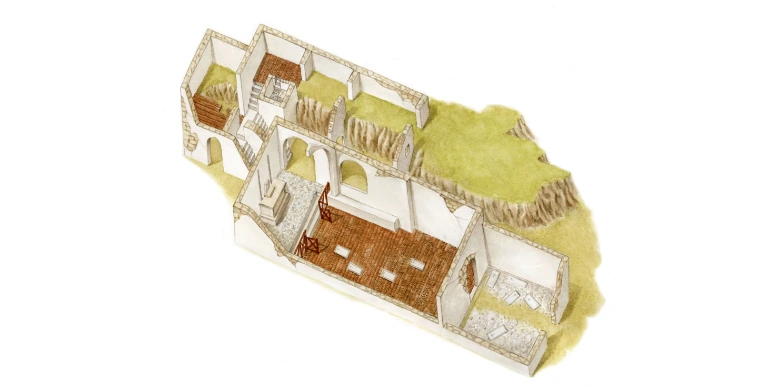
A new transformation took place in the 15th century, during the rule of the Appiani family, with a reconstruction phase that affected the entire castle complex.
The new church was built with a rectangular plan, without an apse, and with a stone-paved cemetery area. A sacristy, a rectory, and rooms used as stables were added to the earlier baptistery.
This major refurbishment also included new decorations in the hall with frescoes and stuccoes, dating from the late 14th to the 15th century. Although the quality of these decorations remains unknown, we know that several frescoes were painted in Scarlino’s churches during this period, including the splendid works of the Sienese school discovered in the nearby Oratory of Santa Croce.
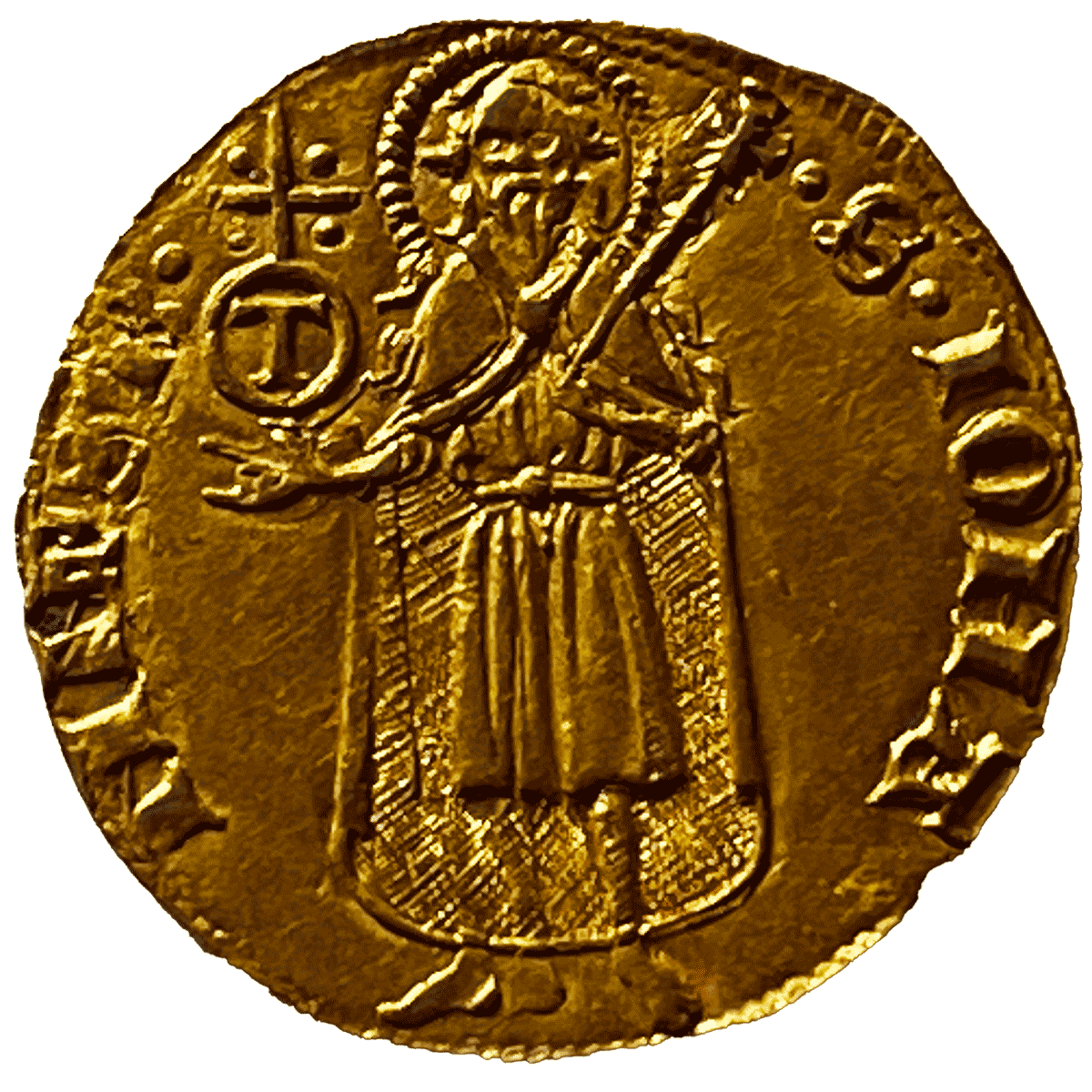
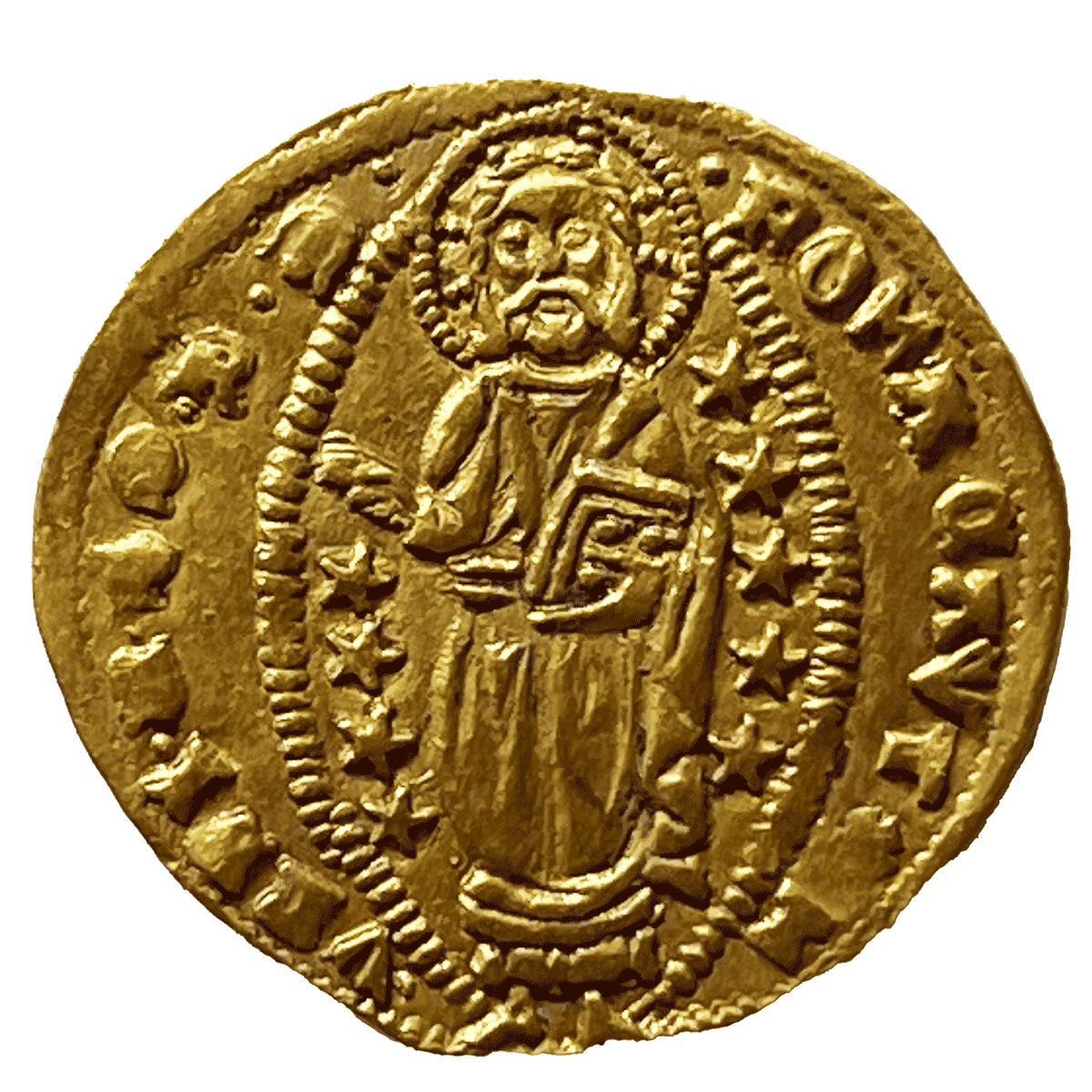
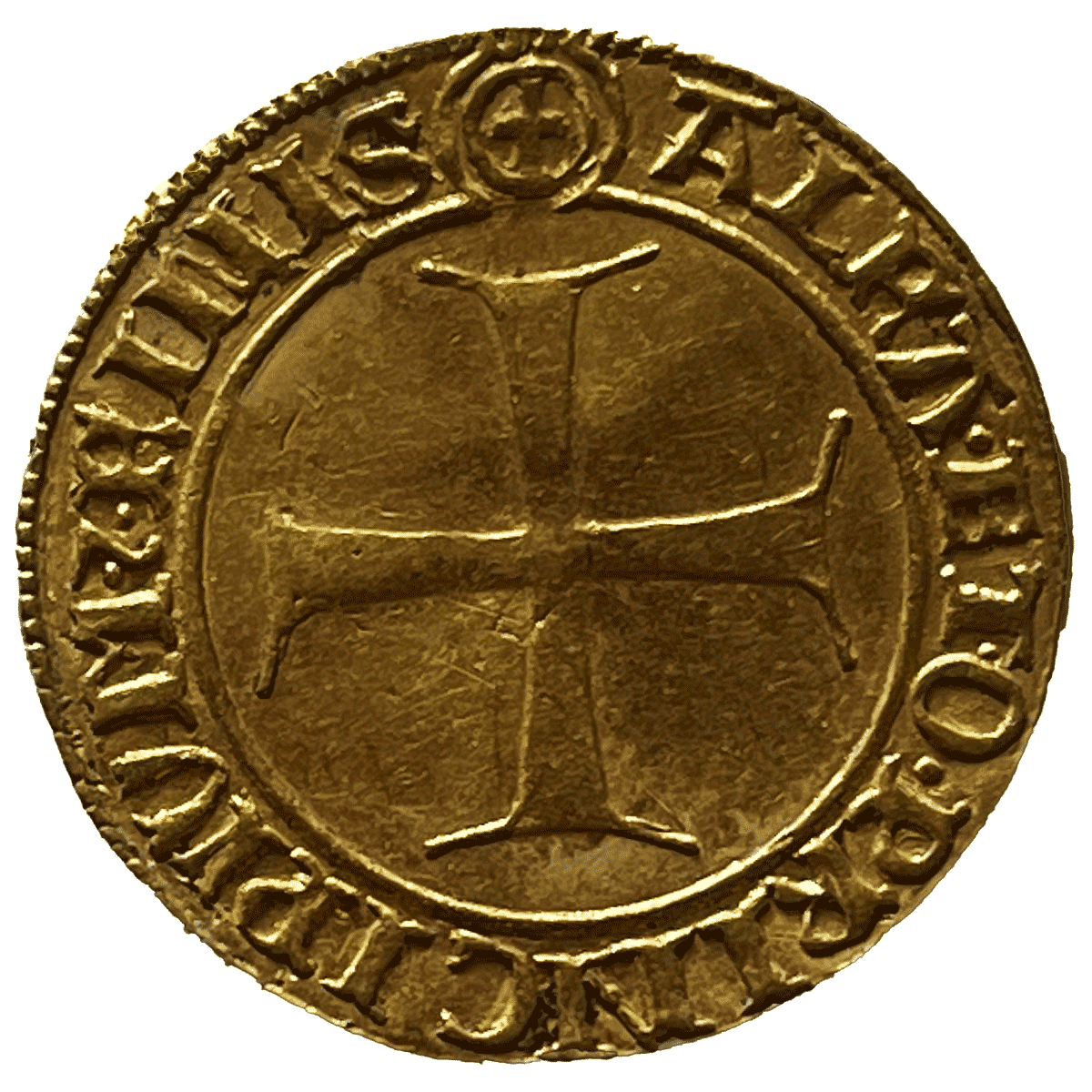
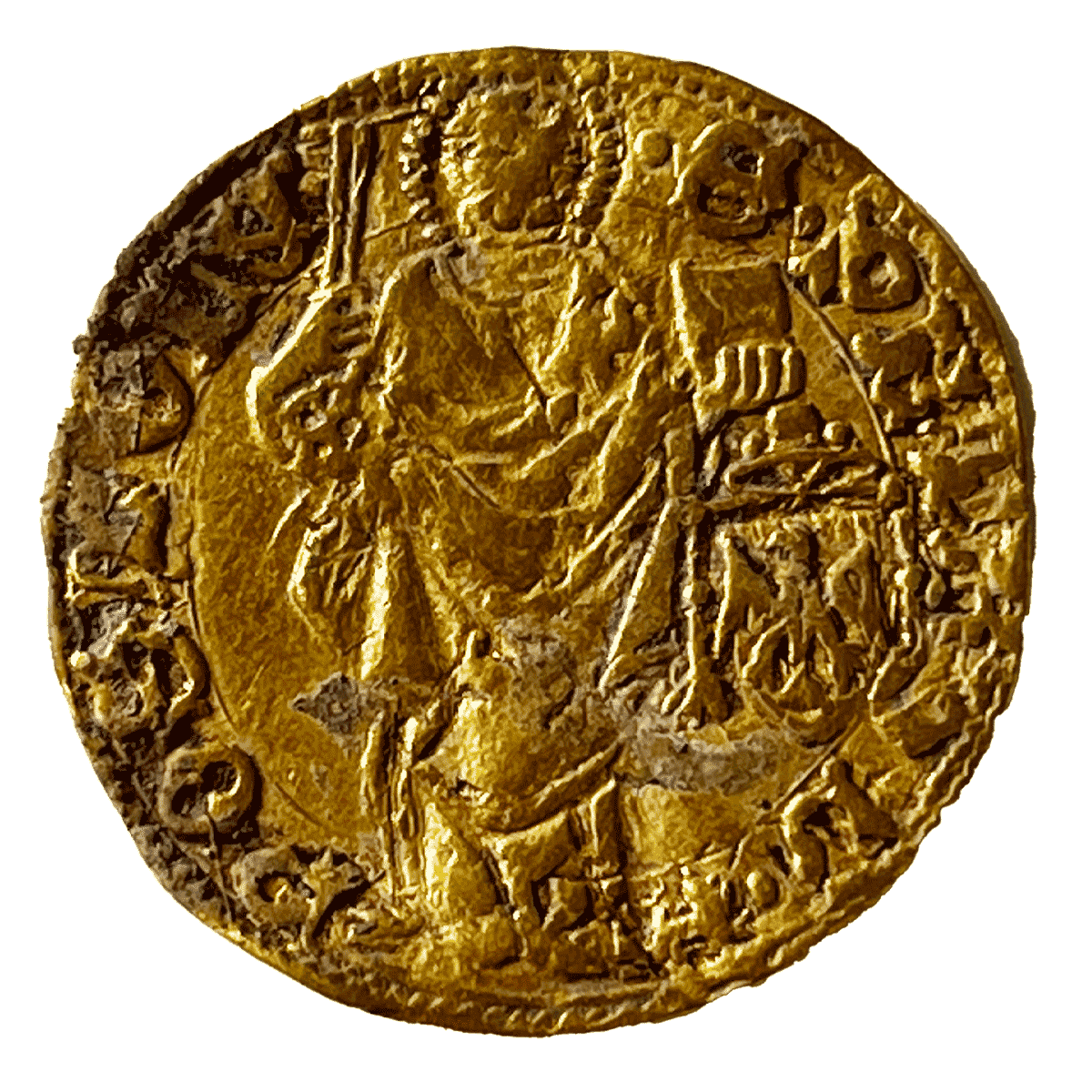
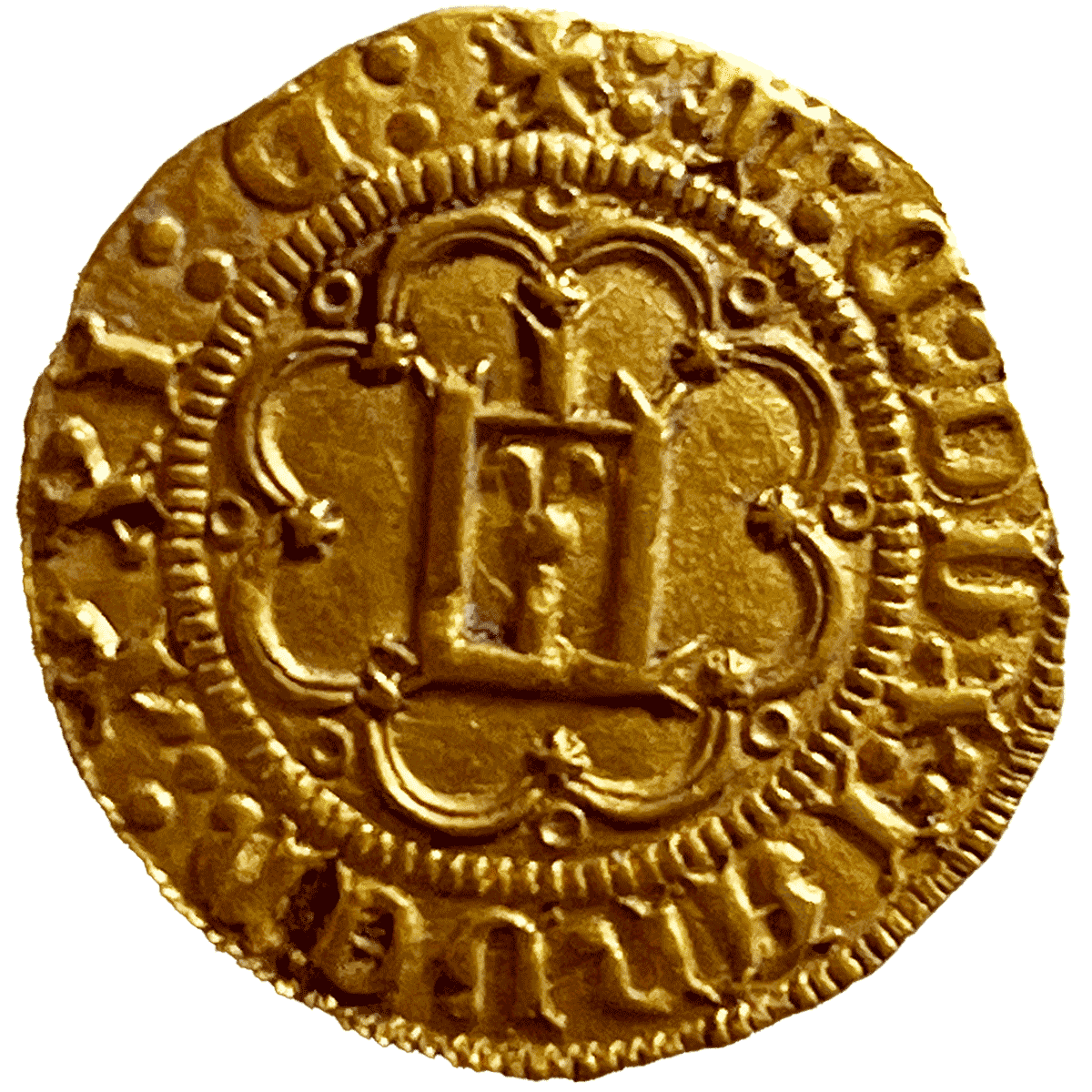
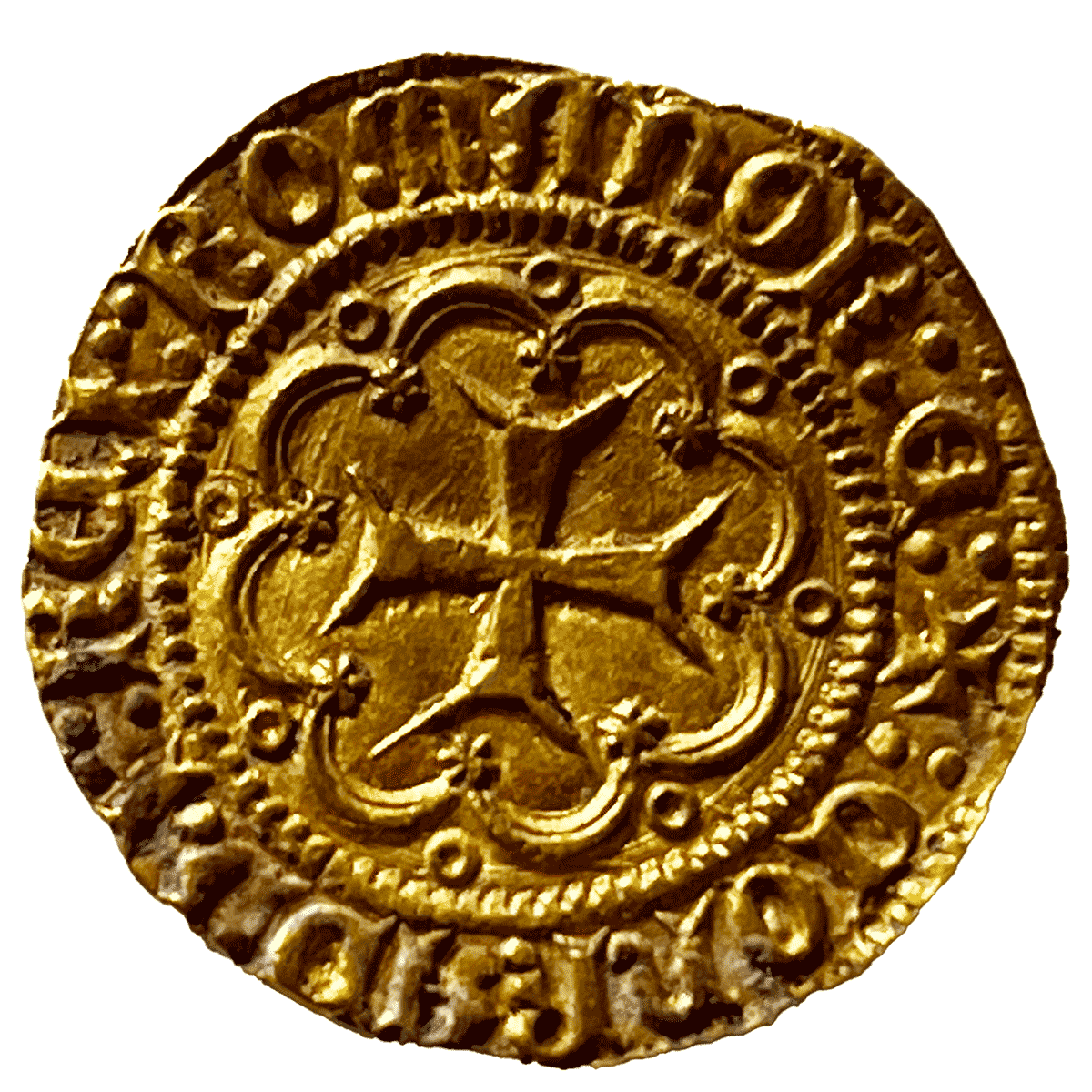
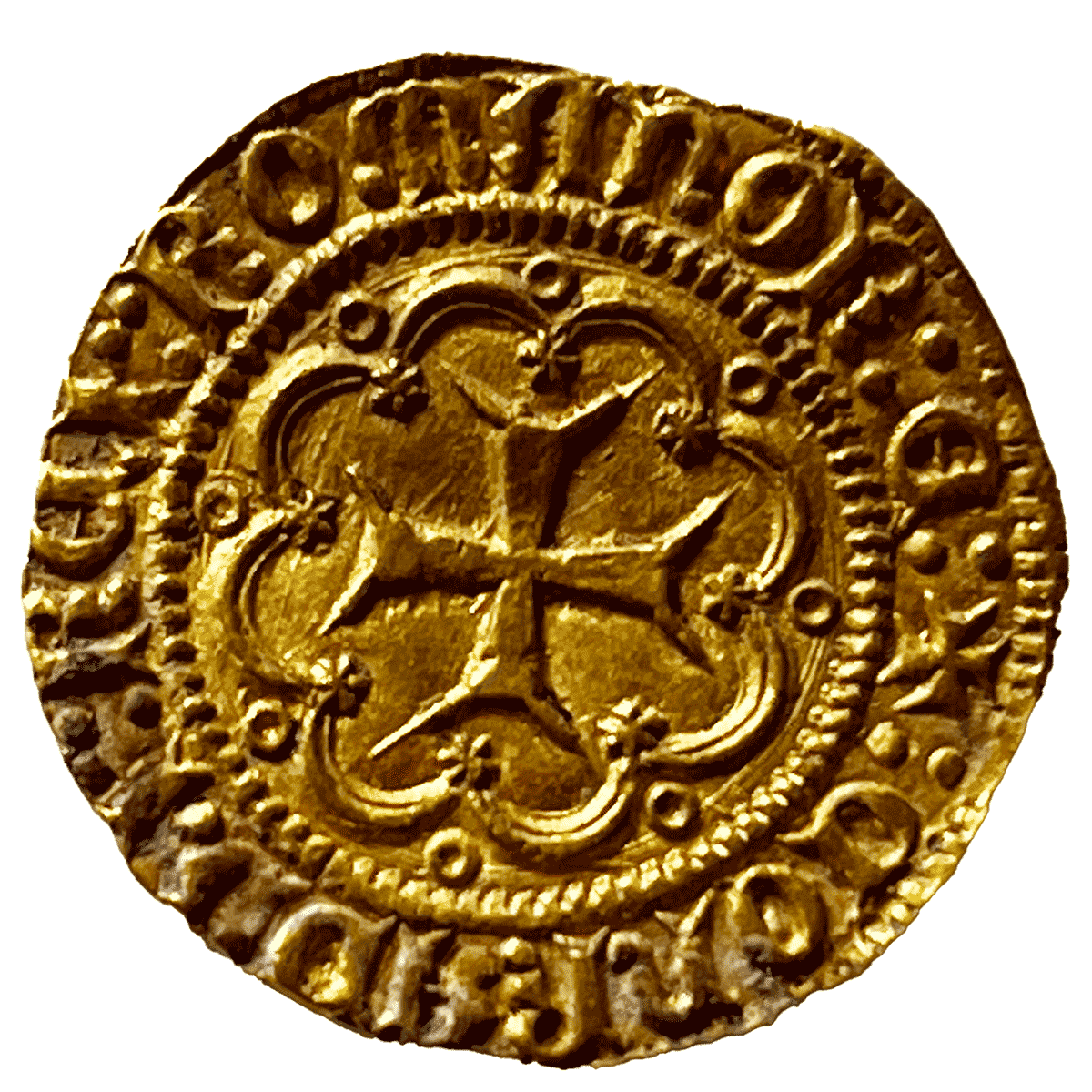
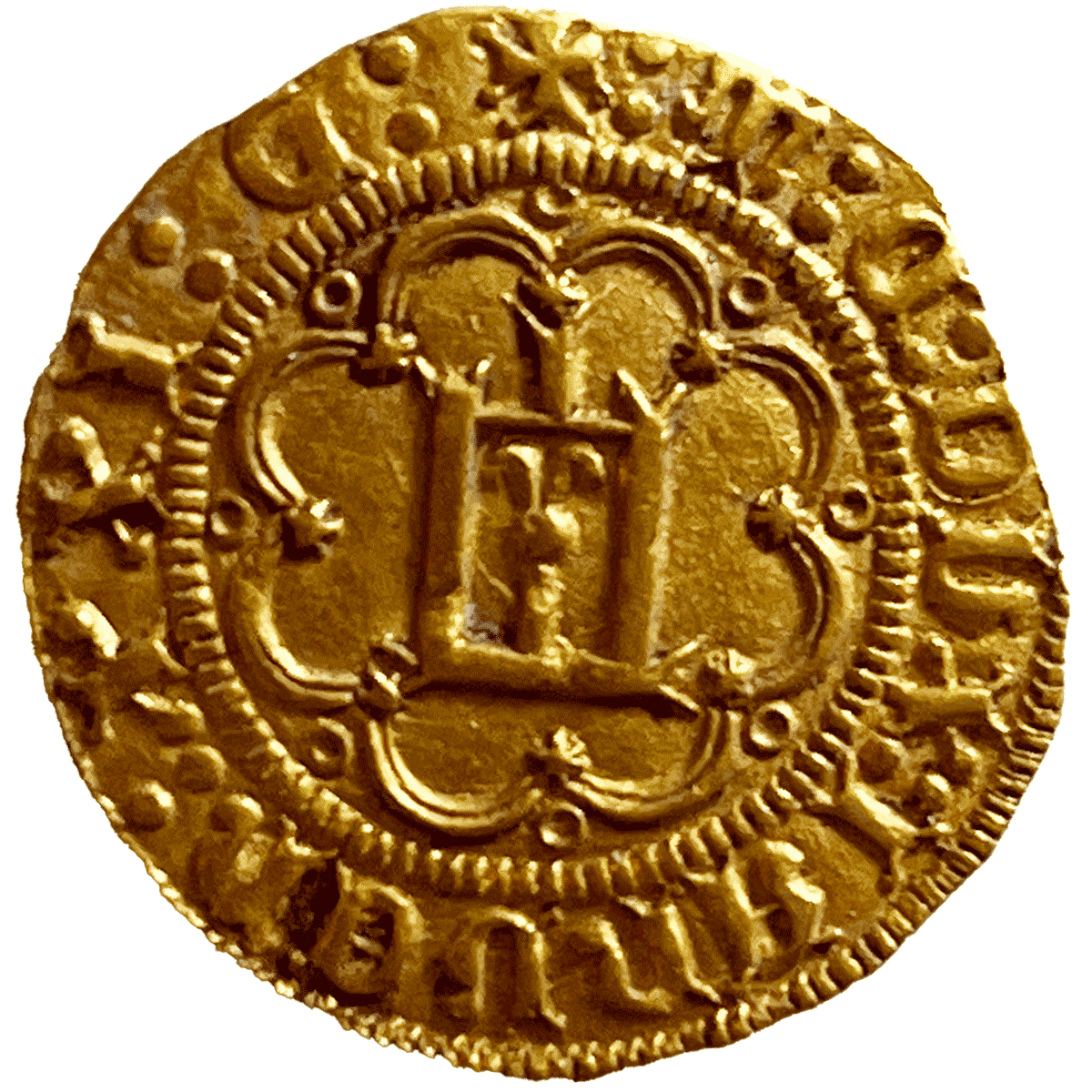
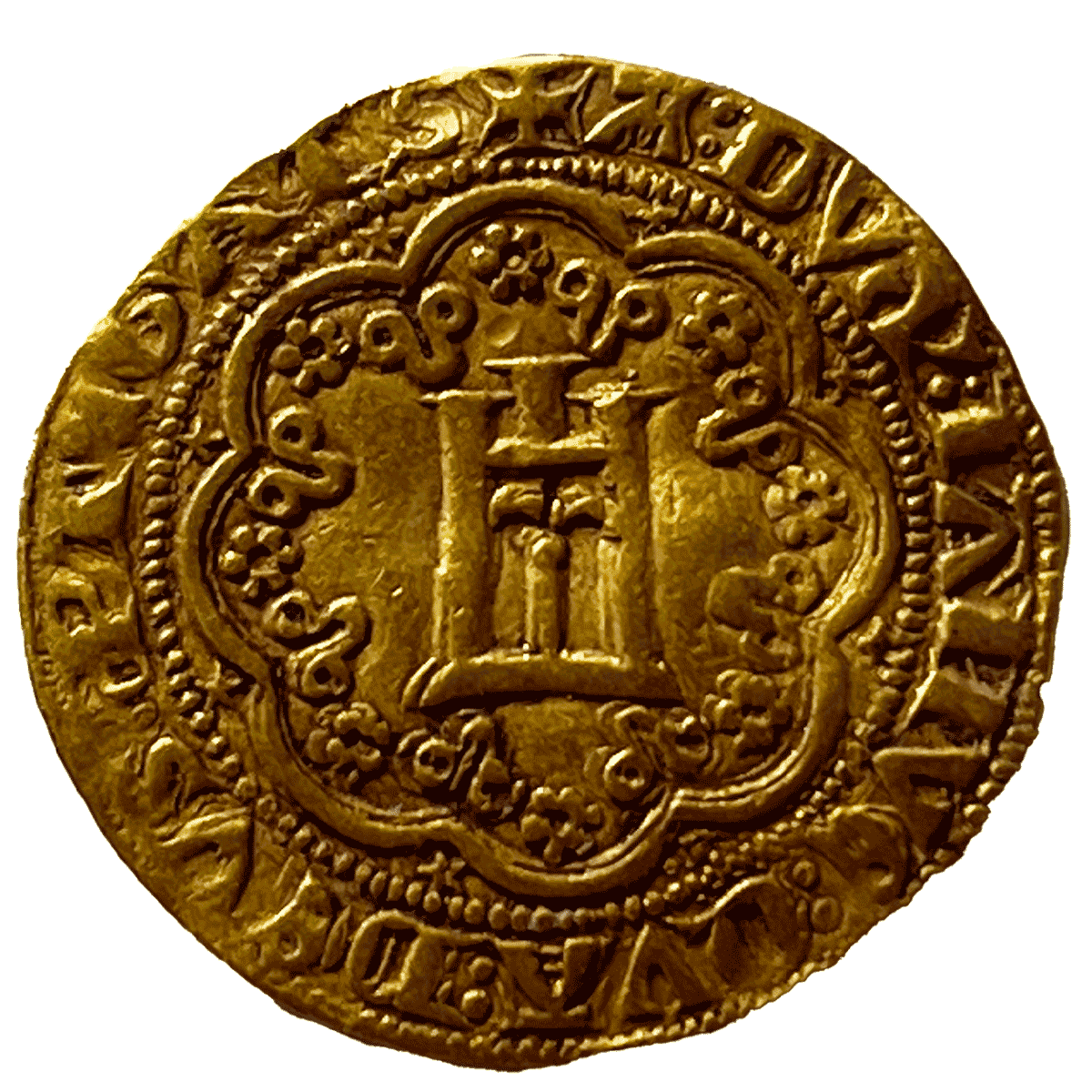
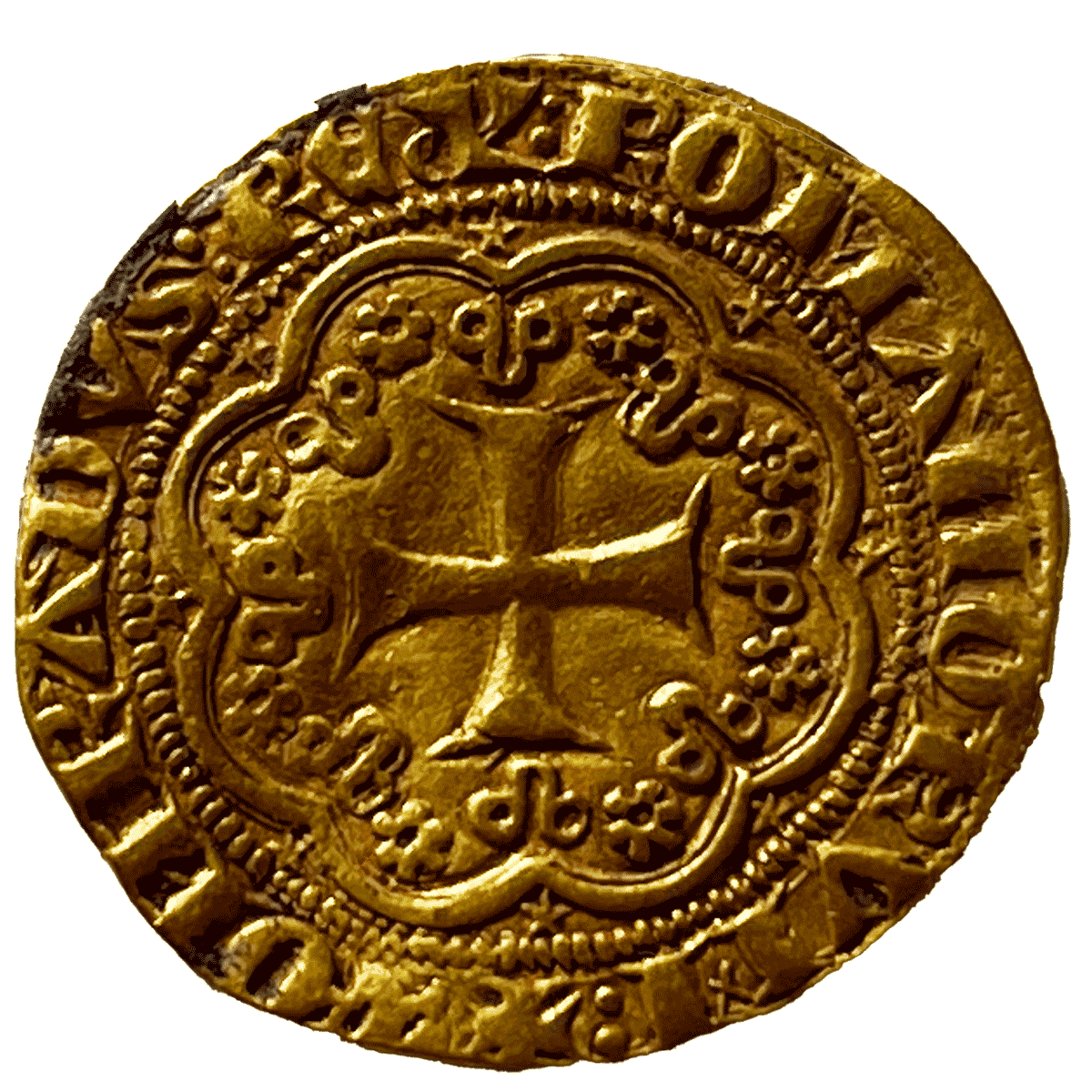
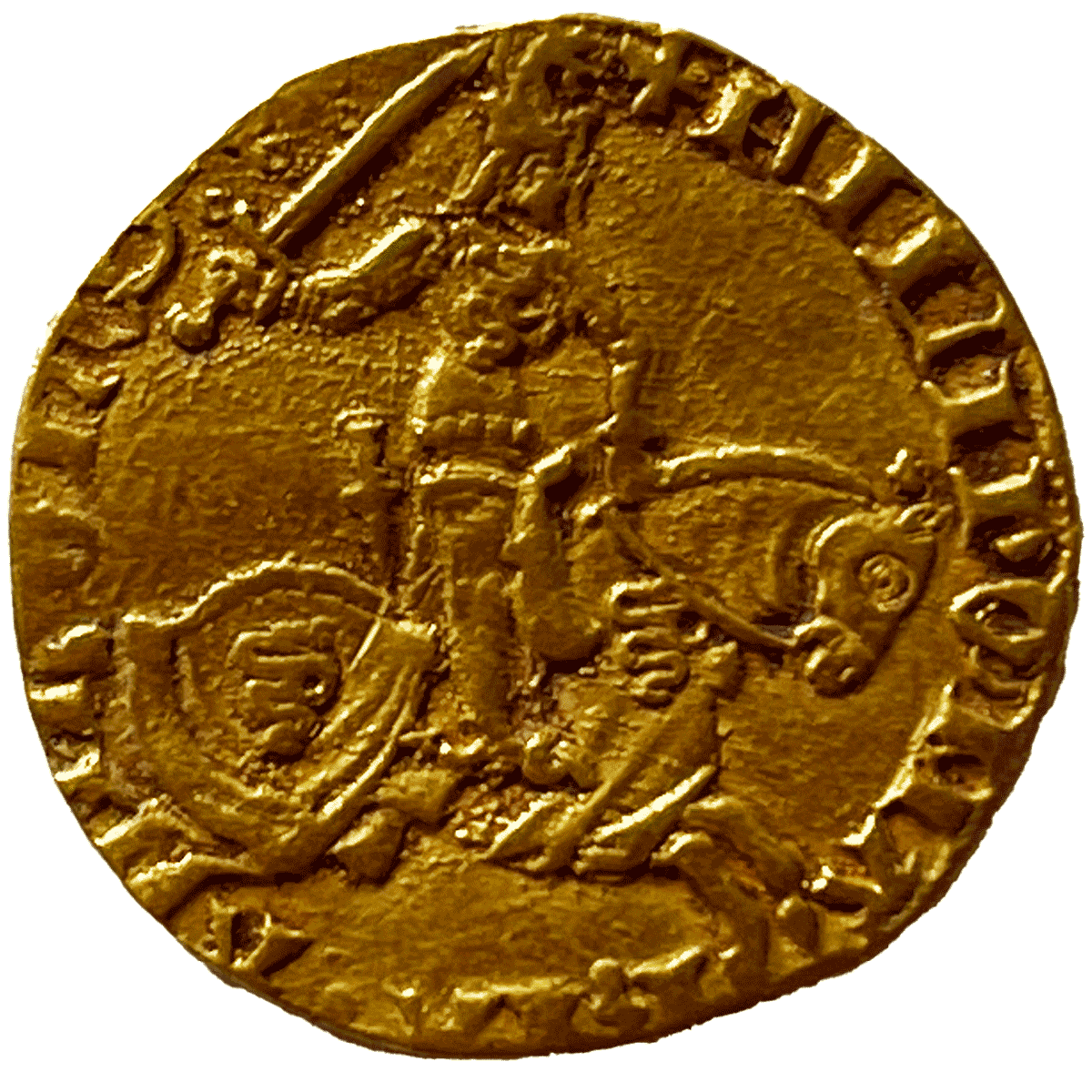
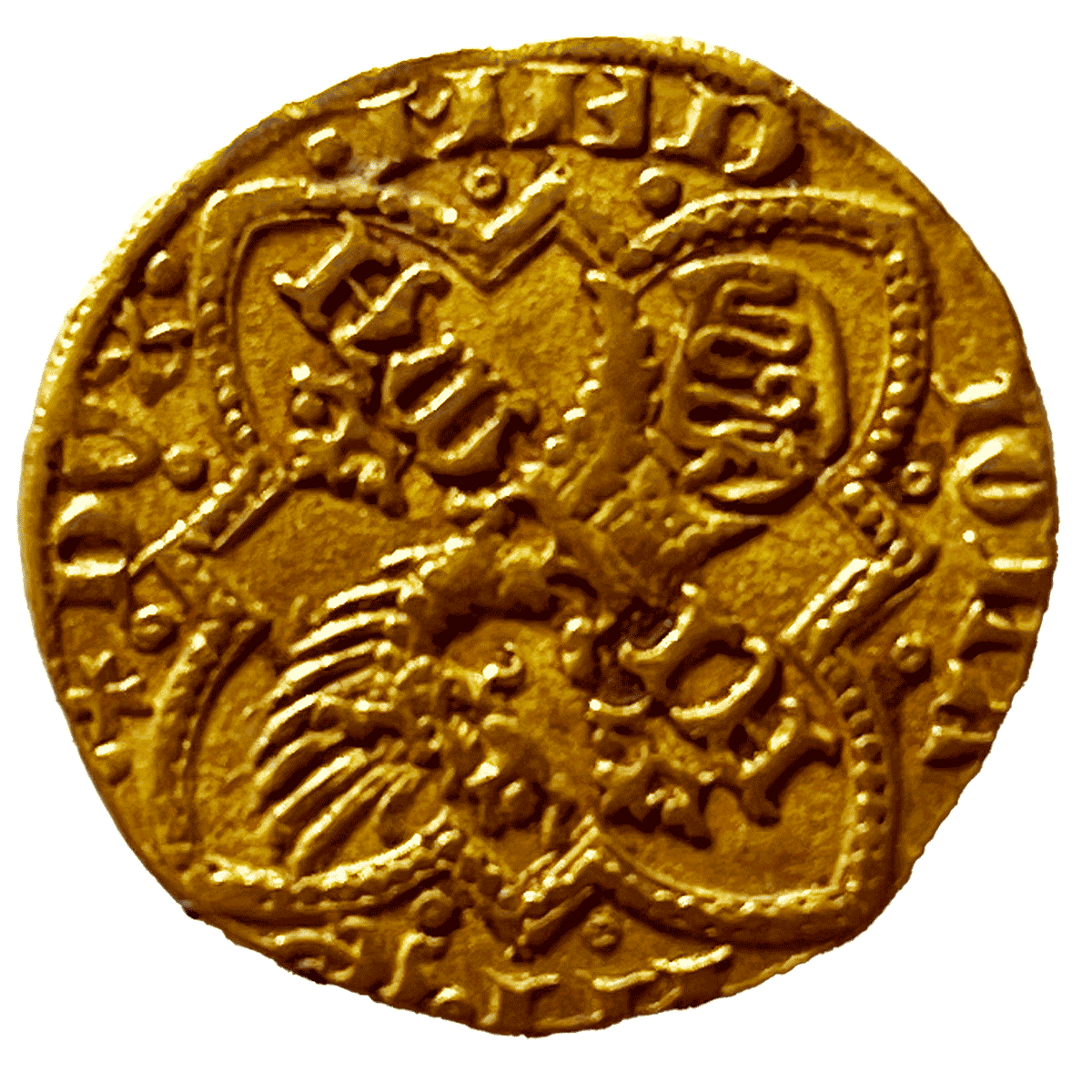
The prosperity of this period is also evidenced by the discovery of a treasure trove of one hundred gold coins, hidden in the wall of the new church.
Scarlino Museums
The Treasure of the Fortress
The so-called ‘Treasure of the Fortress’ consists of one hundred gold coins dating back to around the 15th century, found inside a ceramic container hidden in a niche carved into the wall of the stable adjacent to the ancient castle church. The treasure, recovered during archaeological excavations, was still hidden by the stones used to plug the small opening. Carefully studied, it now tells the story of the Renaissance community of Scarlino.