explore
Scarlino
explore
Scarlino

The Trail of the Coves

A scenic walk between the sea and untouched nature.

The Trail of the Coves

A scenic walk between the sea and untouched nature.

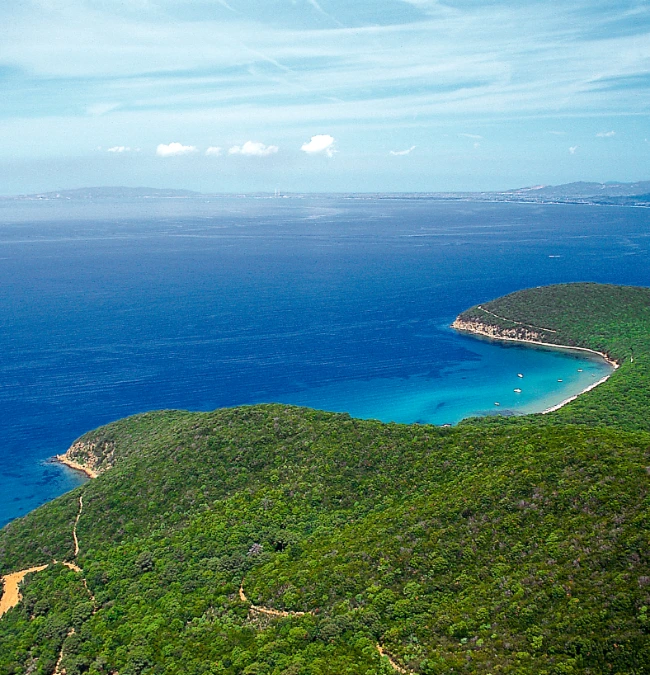
Also known as the Via delle Costiere, The Trail of the Coves runs along the coast of the Bandite di Scarlino Nature Reserve.

The Reserve stretches from the slopes of Monte d’Alma down to the sea and extends across the territories of Scarlino, Gavorrano, Follonica, and Castiglione della Pescaia.

This protected area was already frequented in prehistoric times, as shown by archaeological finds that attest to hunting and farming activities. During the Etruscan period, the land was densely inhabited, as confirmed by the necropolis of Poggio Tondo.

The entire reserve is crossed by a network of trails that allow visitors to explore the natural environment on foot, by bike, or on horseback. The most scenic and evocative route, however, is undoubtedly The Trail of the Coves.

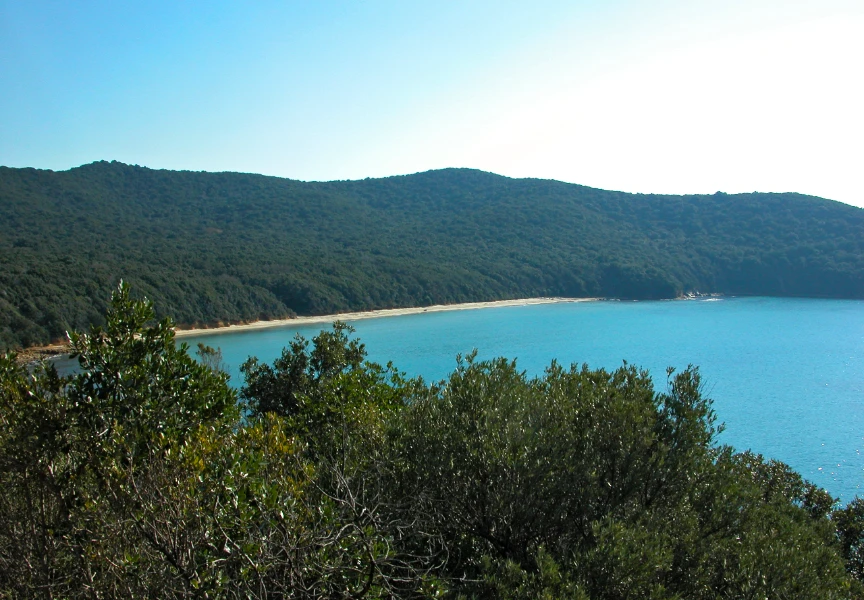
The beaches along the trail, including Cala Martina and Cala Violina, are among the most beautiful in Tuscany, thanks to their crystal-clear waters and striking natural landscapes.

For the return journey, visitors can follow the same path or take an inland route, wilder and more demanding, crossing several hilltops along the way.

The starting point for the walk is Portiglioni. Walking south along Giuseppe Garibaldi seafront, you pass the Marina di Scarlino tourist port and continue along the Trail of the Coves.

explore scarlino

Walking along the Trail

Terra Rossa Coves (Cale di Terra Rossa)

Terra Rossa was a former mining terminal built for the storage and maritime shipment of pyrite.

The mines were managed by the Montecatini group, which later merged with Edison to form Montedison, one of the main industrial giants of 20th-century Italy. The industrial site known as Terra Rossa became the centre of mining activity in the Metalliferous Hills and, throughout the 20th century, was a vital resource for the local economy and population.

In 1909 a transport line was built to connect the mines to the Scarlino Scalo railway station, and two years later the first shipment departed by cableway. Scarlino quickly became one of the most important mining terminals in Europe. When rail transport was no longer sufficient to handle traffic volumes, maritime transport became necessary.

The mining terminal on the strip of land known as Terra Rossa then assumed a strategic role: thanks to sufficiently deep waters, a concrete pier was built near the coast to allow ships to dock. The unloading of ore was connected to the railway terminal via an extension of the cableway, which came into operation in 1919 and even crossed the hamlet of Puntone di Scarlino, reaching the back of today’s tourist marina.

By 1930, pyrite transported to Terra Rossa was stored in a huge silo with a capacity of 10,000 tonnes, still visible today. From there, an underground tunnel led to a second cableway, used to transfer the ore to the pier at sea, where it was loaded onto ships. This system remained in operation until 1968, when it was dismantled: Terra Rossa cove was no longer suitable for the new, larger merchant ships, and maritime transport was no longer competitive.

From that point onwards, the ore was transported by land until 1977, marking the end of an era for the local mining industry.

Violina Cove (Cala Violina)

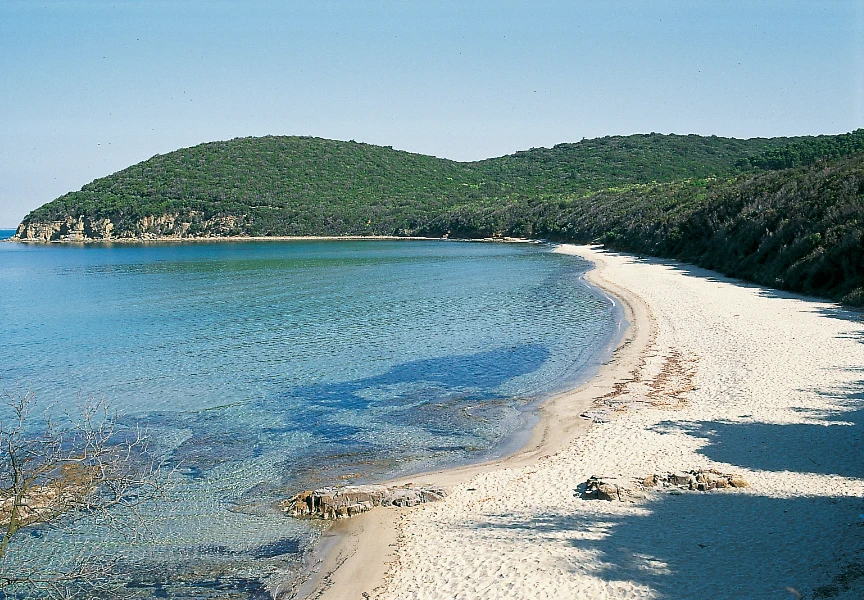
Violina cove is one of the most enchanting beaches of the Tuscan Maremma, located in the municipality of Scarlino, between Follonica and Punta Ala. Nestled within the Bandite di Scarlino Nature Reserve, it is an outstanding example of an unspoilt coastal environment.

The beach lies between two promontories—Punta Martina to the north and Punta Le Canne to the south—and is surrounded by dense Mediterranean scrub.

Its sand, composed of very fine quartz grains, is famous for producing a violin-like sound when walked upon, a rare natural phenomenon that gives the cove its name. This peculiarity is shared by only about a hundred beaches worldwide.

The crystal-clear waters and sandy seabed make Cala Violina ideal for swimming and snorkelling. The beach has no bathing establishments, preserving its wild and authentic character.

To protect its delicate ecosystem, access to Cala Violina is regulated: from 1 June to 15 September, entry is limited to 700 people per day and requires an online booking with a symbolic contribution of €1 per person (children under 12 excluded).

The beach can only be reached on foot or by bicycle, along a 30-minute trail through the reserve. No waste bins are provided, to avoid attracting wildlife such as wild boars; visitors are therefore required to take their rubbish away with them. The best times to visit are spring and early autumn, when the beach is less crowded.

Civette Cove (Cala Civette)

The Civette Tower is an ancient coastal tower standing on a promontory near the mouth of the Alma stream.

Built in the 16th century on the remains of an earlier medieval fortification, the Civette Tower was part of the defensive system of the Principality of Piombino, serving mainly as a lookout to protect the coast from raids.

During the 18th century and the first half of the 20th century, the tower underwent several renovations that altered its original appearance. It was later converted into a private residence and incorporated into the nearby agricultural estate.

Surrounded by Mediterranean scrub, the Civette Tower overlooks Cala Civette beach, one of the most unspoilt in the Maremma. The beach is characterised by crystal-clear waters, golden sand, and rich marine biodiversity—an ideal destination for nature lovers and snorkelling enthusiasts.