Listen to this page
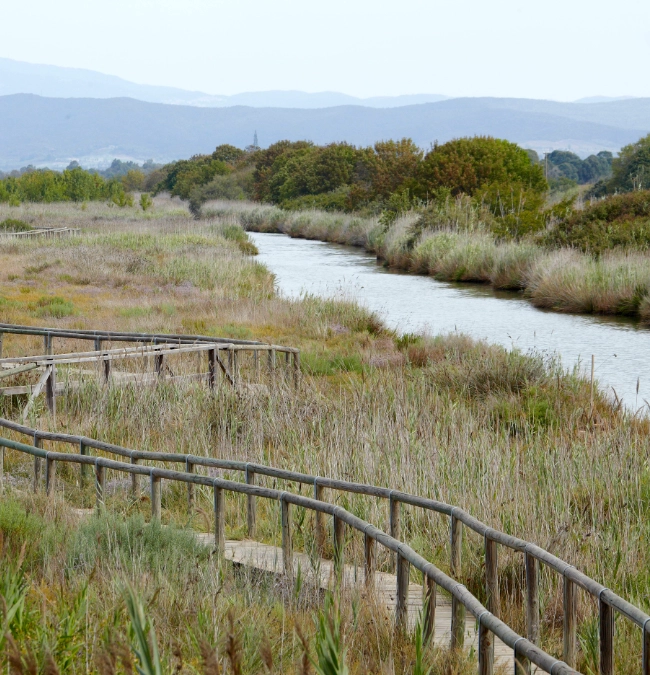
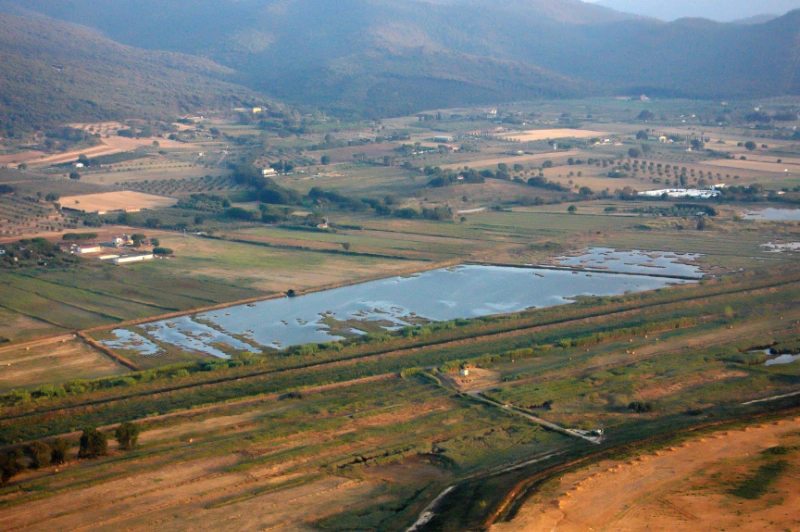
The Padule of Scarlino is a protected area in the province of Grosseto, located between the Pecora River and the Allacciante Canal, separated from the coast by just a few dozen metres. The Padule is a candidate Site of Community Importance (pSCI) as it preserves some of the original features of the ancient marshland environment of the Maremma and provides suitable habitats for the life and migration of several rare animal species, particularly birds.
The Padule of Scarlino is a protected area in the province of Grosseto, located between the Pecora River and the Allacciante Canal, separated from the coast by just a few dozen metres. The Padule is a candidate Site of Community Importance (pSCI) as it preserves some of the original features of the ancient marshland environment of the Maremma and provides suitable habitats for the life and migration of several rare animal species, particularly birds.
il Padule
The starting point for a visit to the Padule is along the Collacchie provincial road, in the Puntone area. Its location is strategic, as it also allows visitors to explore the MAPS – Archaeological Museum of Portus Scabris and the Marina di Scarlino.
The History of the Padule
In the 19th century, some remains dating back to Roman times were still visible in the Padule, when Portus Scabris flourished on the southern edge of the gulf. Evidence of this survives in several descriptions, particularly those written by Leopold II, Grand Duke of Tuscany.
explore scarlino
Walking through the Padule
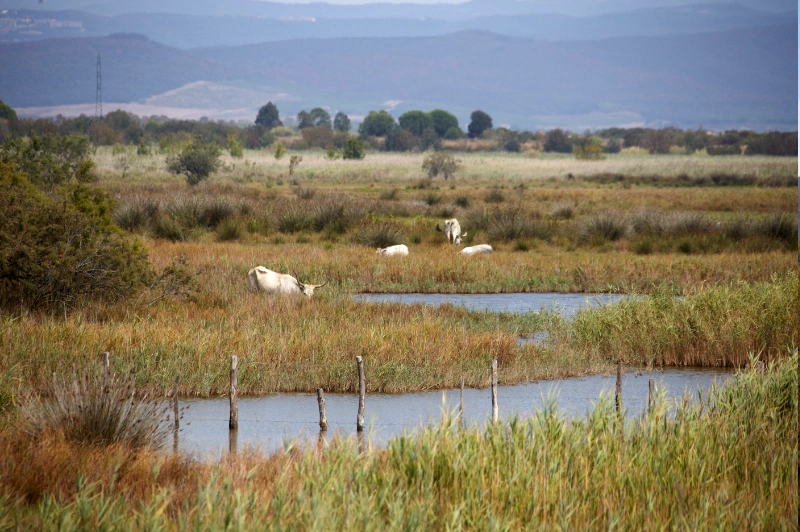
Vegetation
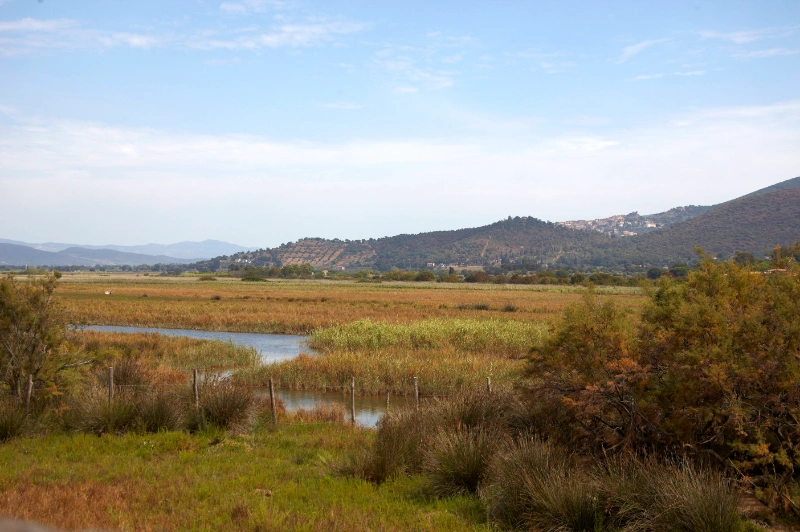
The vegetation of the Padule varies mainly according to the salinity of the water. It hosts the common reed (Phragmites australis), which in areas of low salinity grows alongside sea club-rush (Scirpus maritimus), several types of rush (Juncus gerardii, Juncus maritimus), and sea purslane. In the more saline wet depressions, one also finds saltmarsh grass (Puccinellia festuciformis).
Fauna
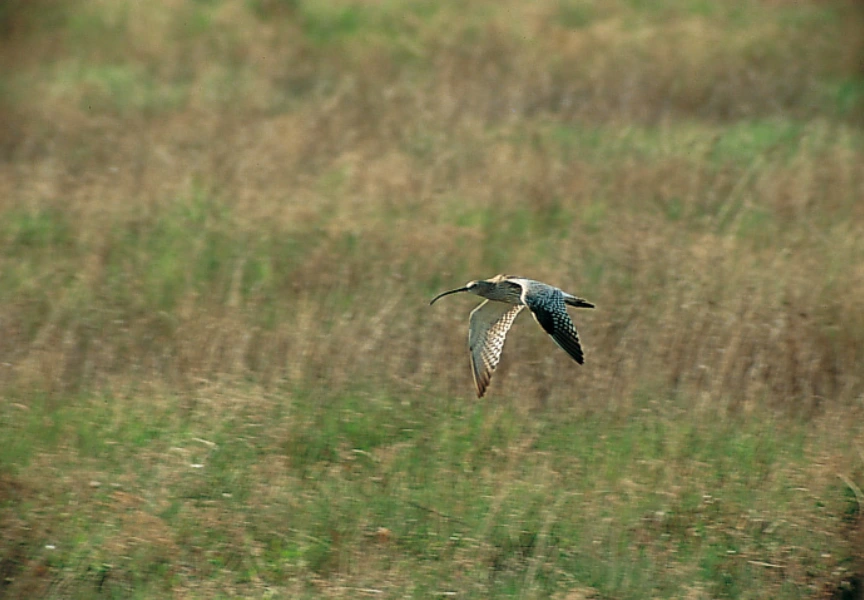
Among the rarest bird species found in the Padule are the marsh harrier (Circus aeruginosus), the bittern (Botaurus stellaris), the moustached warbler (Acrocephalus melanopogon), and the ferruginous duck (Aythya nyroca).
Reptiles include the European pond turtle (Emys orbicularis), Hermann’s tortoise (Testudo hermanni), and among snakes, the four-lined snake (Elaphe quatuorlineata), the green whip snake (Hierophis viridiflavus), and the asp viper (Vipera aspis).
Amphibians are represented by several species of newts, the pool frog (Pelophylax lessonae), and the edible frog (Pelophylax kl. esculentus). Invertebrates include the Jersey tiger moth (Callimorpha quadripunctata), the European moth (Euplagia quadripunctaria), and many species of dragonflies.
Finally, mammals are those commonly found in the countryside and woodlands of the Tuscan Maremma: wild boar, fox, weasel, beech marten, badger, hedgehog, porcupine, coypu, pine marten, and roe deer.