explore
Scarlino

The Etruscans in Scarlino
The connection between Scarlino and the history of the Etruscans began in 1979, when archaeologist Riccardo Francovich uncovered Etruscan pottery beneath the medieval walls of the Rocca, sparking new interest in the origins of the village.
Listen to this page
Human presence on the hill of Scarlino dates back to a Late Bronze Age hut village (12th century BC). This first settlement was abandoned in the 10th century BC as new centres grew in Vetulonia and Populonia. From the 8th–7th centuries BC, with the rise of Vetulonia, Scarlino was repopulated with small rural communities, often linked to metalworking activities. Archaeological evidence shows iron ore reduction structures on the Rocca itself. The area lay between the spheres of influence of Vetulonia in the south and Populonia in the north, connected by a network of roads and settlements, including the necropolis of Poggio Tondo in the Val d’Alma. In the 5th–4th centuries BC, an impressive Hellenistic fortress was built on the Rocca of Scarlino, dominating the Gulf of Follonica and the Island of Elba during a period of Vetulonia’s decline and Populonia’s expansion. This fortress reflects new defensive needs in the face of Roman expansion, which gradually led to the decline of Etruscan civilisation and the Romanisation of the territory from the 3rd century BC.
Poggio Tondo Archaeological Area
The Poggio Tondo Archaeological Area, in the middle Alma Valley, is one of the most important Etruscan sites in Scarlino. Settled about 2,600 years ago, it preserves both a necropolis and a residential structure known as the “farmhouse” of Pian d’Alma.
The Poggio Tondo Necropolis
This necropolis shows the strong influence of Vetulonia, the great Etruscan city-state that controlled the area.
explore scarlino
The Tombs

The Drum Tomb
The Drum Tomb Named after the alternating rows of white limestone and sandstone slabs that encircled the burial mound, this tomb originally had a square chamber accessed through a corridor (dromos). Finds include glass and ceramic unguent jars, Corinthian and Etrusco-Corinthian vessels, and fine black bucchero tableware decorated with floral and animal motifs. The individuals buried here were members of an aristocratic group, likely princes settled in the Alma Valley under Vetulonia’s authority.
The Chariot Tomb
The oldest of the necropolis, this tomb marks the transition from pit graves with stone circles to chamber tombs with mounds and drums. Dating to the mid-7th century BC, it consists of a large rectangular chamber with sandstone walls nearly two metres high. Finds include parts of a two-wheeled vehicle (possibly a war or parade chariot), weapons, and rich ceramic offerings such as bucchero kantharoi and kyathoi. The burial belonged to a warrior prince, considered the head of the aristocratic clan.

Etruscan Vessels – Everyday Life and Rituals


Amphora
Large container with two handles, used for transporting wine, oil, or fish sauces.

Krater
Wide-mouthed vessel used at banquets to mix wine with water, sometimes with honey or cheese.

Kyathos
Ladle-shaped cup with a single handle, used for serving wine.

Oinochoe
Jug with a single handle, used for pouring wine.

Kylix
Shallow, wide cup with a tall stem and two handles, used for drinking wine.

Pyxis
Cylindrical container with a lid, used to hold cosmetics or personal items.
The Twin-Door Tomb
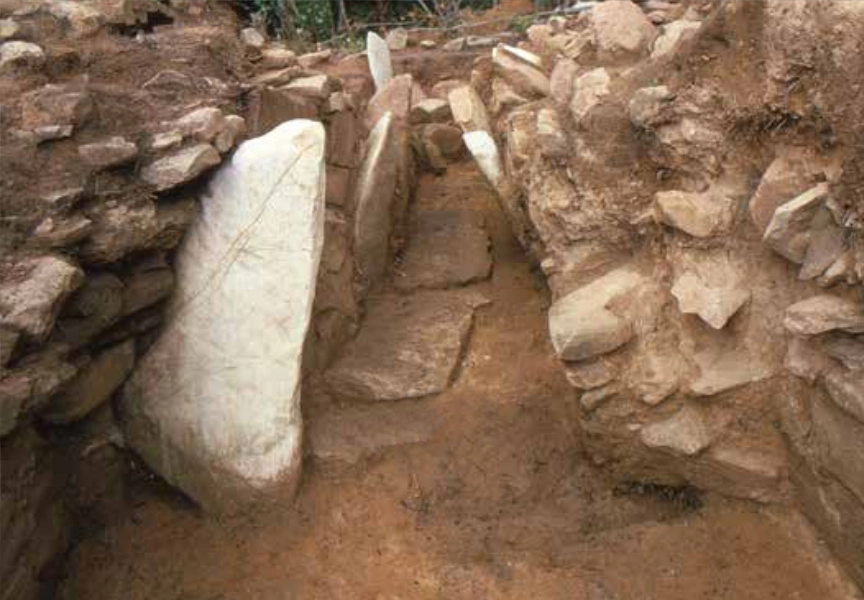
Dating to the second half of the 7th century BC, this tomb is remarkable for its rectangular chamber with a pseudo-dome supported by four angular pendentives. The entrance corridor (dromos) was adapted into an antechamber during construction. Finds include glass-bead jewellery and pairs of ceramic sets in bucchero and Corinthian-style wares. The tomb housed two individuals: a warrior prince (identified by iron weapons) and likely a woman, buried in the adapted dromos.
The Stele Tomb
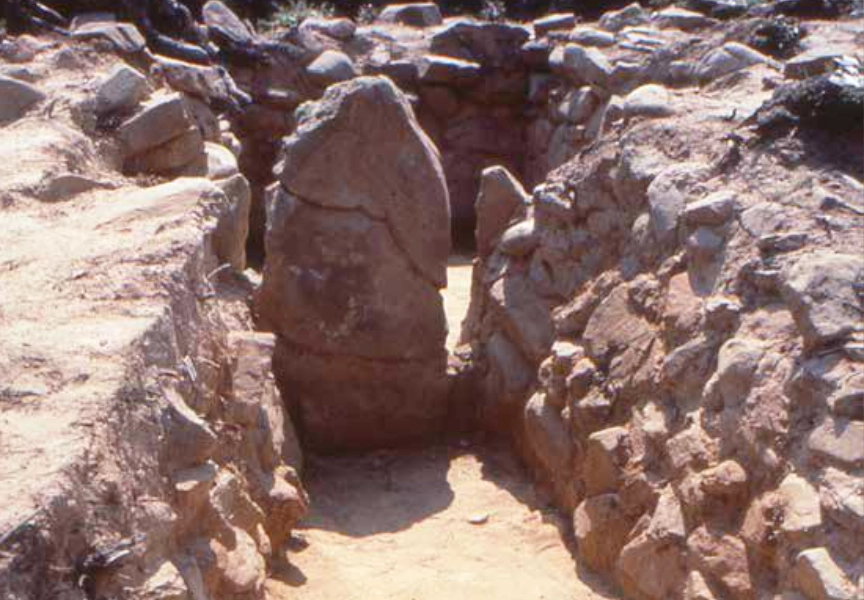
The most recent burial, from the 7th–6th century BC, has a square chamber with a pseudo-dome, reached through an offset dromos. Its name comes from a convex-topped stone stele found on top of the mound, the only known funerary marker of the site, clearly of Vetulonia style. The burial goods include a wide range of bucchero pottery and a unique multi-container vessel for cosmetics. The symbolic meaning of the stele reflected the clan’s desire to affirm continuity beyond death.